3 de julio de 20063 July 2006
MEMORIAL
Voces de las víctimas del accidente
de metro de València
Voices of the victims of the
València metro accident
Por Dani Fabra, Vicent Peris, Àlex Badia y Carlos Torres By Dani Fabra, Vicent Peris, Àlex Badia and Carlos Torres
Fotos de Elisa BermejoPhotos by Elisa Bermejo
Machine-translated from Spanish
videos/1_intro.mp4Enric Chulio
marido de Maribel Sisternashusband of Maribel Sisternas
Sí, sí tengo recuerdos. De los días siguientes casi no recuerdo nada, pero del día 3 tengo muchos recuerdos. El 3 de julio de 2006 era lunes. El accidente ocurrió unos pocos minutos después de la una del mediodía y me pilló en el trabajo. No era consciente de lo que había pasado. Mi trabajo estaba cerca de la estación y salí a la calle con algunos compañeros porque oímos sirenas. Vi que pasaban muchas ambulancias, muchos coches de policía. “Debe de haber pasado algo gordo”, comentamos. Entonces, mi suegra, la madre de mi mujer, me llamó al móvil, llorosa, diciéndome: “la nena no llega”.Yes, yes I have memories. Of the days that followed I remember almost nothing, but of the 3rd I have many memories. The 3rd of July 2006 was a Monday. The accident happened a few minutes after one in the afternoon and it caught me at work. I wasn't aware of what had happened. My office was near the station and I went out into the street with some colleagues because we heard sirens. I saw a lot of ambulances going by, a lot of police cars. “Something serious must have happened,” we said. Then my mother-in-law, my wife's mother, called my mobile, in tears, telling me: “the girl isn't coming home.”
Mi mujer, Maribel, era enfermera y trabajaba desde hacía varios años en el hospital La Fe. Había pedido una reducción de jornada porque nuestro hijo todavía tenía un año y medio, así que dejaba de trabajar sobre la una y tomaba el metro hacia casa. Por lo general, iba directa a casa de su madre, que se quedaba con nuestro hijo. La abuela fue la primera en notar que se retrasaba.My wife, Maribel, was a nurse and had been working for years at the La Fe hospital. She had asked for reduced hours because our son was still only a year and a half old, so she usually stopped working around one and took the metro home. As a rule she went straight to her mother's house, who looked after our son. The grandmother was the first to notice she was running late.
Consulté internet pero en la web del metro no decían nada. Así que a las dos cerré la oficina y me fui para casa. Pasé por delante de una parada de metro, me asomé y vi que las puertas y las rejas estaban cerradas. Me extrañó mucho, así que me fui directo hacia casa de mi suegra. Allí ya estaba mi cuñado, que es médico. Él había empezado a contactar con compañeros de los diferentes hospitales de Valencia para preguntarles por mi mujer, pero en ningún centro sabían nada de ella. Pasamos un tiempo sin saber qué hacer o a dónde ir, pero al final nos fuimos a la parada de metro de Jesús porque se decía que el accidente había sido allí. Llegamos sobre las tres de la tarde y la Cruz Roja ya había montado algunas tiendas para atender a los heridos.I checked online but the metro's website said nothing. So at two I closed the office and headed home. I passed a metro stop, looked in and saw that the doors and gates were closed. That struck me a lot, so I went straight to my mother-in-law's. My brother-in-law, who's a doctor, was already there. He had started contacting colleagues at the different Valencia hospitals to ask after my wife, but at no hospital did they know anything about her. We spent a while not knowing what to do or where to go, but in the end we went to Jesús metro station, because word was the accident had been there. We got there around three in the afternoon and the Red Cross had already put up tents to attend to the injured.
Fotos: Rafa GilPhotos: Rafa Gil
La zona estaba cerrada por la policía y había otras personas en mi misma situación. Nos identificamos como familiares de posibles afectados pero nadie sabía nada, así que pasamos dos horas sin movernos hasta que, sobre las cinco de la tarde, nos pusieron unos autobuses para trasladarnos a la Ciudad de la Justicia. Yo no me preocupé en ningún momento, pensaba que como mi mujer era enfermera y había habido un accidente, lo más probable era que se hubiese ofrecido para ayudar. Es verdad que ni su móvil daba señales ni ella había intentado ponerse en contacto con nosotros, pero yo sabía que al móvil le quedaba poca batería. Por la mañana, lo había oído pitar y ella me había dicho: “da igual, ya lo cargaré a mediodía”.The area had been sealed off by the police and there were other people in the same situation as us. We identified ourselves as relatives of possible victims but no one knew anything, so we spent two hours without moving until, around five in the afternoon, they put us on buses to take us to the City of Justice. I wasn't worried at any point — I thought that since my wife was a nurse and there had been an accident, she had most likely volunteered to help. It's true that her mobile gave no signal and she hadn't tried to reach us, but I knew the battery was low. That morning I had heard it beep and she had told me: “never mind, I'll charge it at lunchtime.”
Cuando llegamos a la Ciudad de la Justicia nos encontramos con una gran aglomeración de gente. Debíamos de ser unas quinientas personas pero nadie sabía nada. Habían abierto varias salas por si alguien quería apartarse y estar más tranquilo. Los voluntarios de la Cruz Roja repartían pastillas y calmantes a quienes lo necesitaban. Sólo dejaban entrar a personas que demostraran que tenían relación con algún posible afectado. Cuando entramos nosotros nos hicieron una entrevista. Preguntaban por detalles concretos, cómo iba vestida la persona que nos faltaba y cosas así, pero no nos decían si estaba en el hospital o en el forense. Así pasaron las horas. Se hicieron las doce de la noche y todavía seguían sin decirnos nada. La gente empezó a enganchar al paso a algunos funcionarios, los agarraban y les preguntaban si llevaba alguna lista de nombres encima, los acosaban para preguntarles por su familiar. Mi cuñado y yo hicimos lo mismo. Detuvimos a un funcionario y le preguntamos si el nombre de mi mujer estaba en la lista. Pues sí. Allí estaba: Maribel Sisternas Martínez.When we got to the City of Justice we found a huge crowd. There must have been about five hundred of us, but nobody knew anything. They had opened several rooms in case anyone wanted to step aside and be somewhere quieter. Red Cross volunteers were handing out pills and sedatives to whoever needed them. They only let in people who could prove they had a connection to someone potentially affected. When we went in they interviewed us. They asked about specific details — how the missing person was dressed, that sort of thing — but they didn't tell us whether she was at the hospital or at the morgue. The hours went by like that. Midnight came and they still weren't telling us anything. People started catching civil servants as they walked by, grabbing them and asking if they had any list of names on them, pressing them for information about their relative. My brother-in-law and I did the same. We stopped one of them and asked whether my wife's name was on the list. It was. There it was: Maribel Sisternas Martínez.
No se me había pasado por la cabeza en ningún momento que mi mujer pudiera estar muerta. No sé por qué no lo sospeché porque a las tres se habían llevado de allí a todos los supervivientes. Así que los que faltaban, los que quedaban allí, eran los muertos. En ese momento fui consciente de la realidad. No puedo decir que despertara, al contrario, fue como caer en un sueño de tinieblas. Se me apagaron las luces, se me apagó toda la luz.It hadn't crossed my mind at any moment that my wife could be dead. I don't know why I didn't suspect it, because by three they had taken all the survivors out of there. So those who were still missing, those who remained there, were the dead. At that moment I became aware of reality. I can't say I woke up — on the contrary, it was like falling into a dream of darkness. The lights went out, all my light went out.
Aguantamos allí hasta que a la una nos dejaron entrar a hacer el reconocimiento del cadáver a través de un cristal. Sólo nos dejaron ver una parte de la cara. No nos querían enseñar nada más porque el cuerpo estaba deshecho. Yo la reconocí, pero si me hubieran preguntado en ese momento si era mi mujer, creo que hubiera dicho que no: “No, esta no puede ser mi mujer, mi mujer no está muerta”. Eso era lo que tenía en la cabeza. Por más que mis ojos la estuviesen viendo y fuera inconfundible, yo sólo le veía un trozo de la cara. Pero era ella. Era ella.We held on there until at one they let us in to identify the body through a glass screen. They only let us see part of her face. They didn't want to show us any more because her body had been destroyed. I recognised her, but if they had asked me at that moment whether it was my wife, I think I would have said no: “no, this can't be my wife, my wife isn't dead.” That was what was going through my head. However much my eyes were seeing her, however unmistakable it was, I only saw a piece of her face. But it was her. It was her.
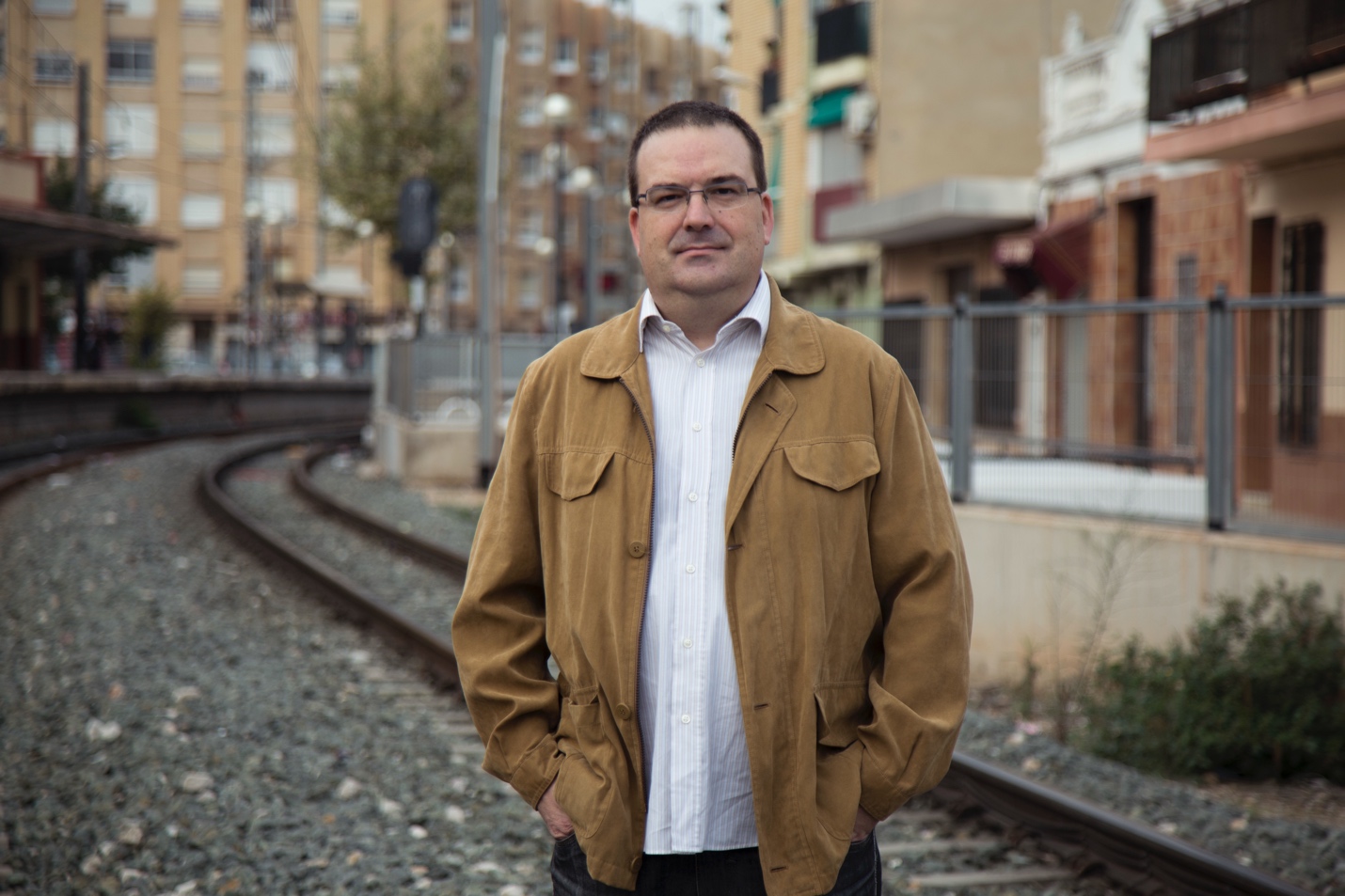
Ana Esplugues
supervivientesurvivor
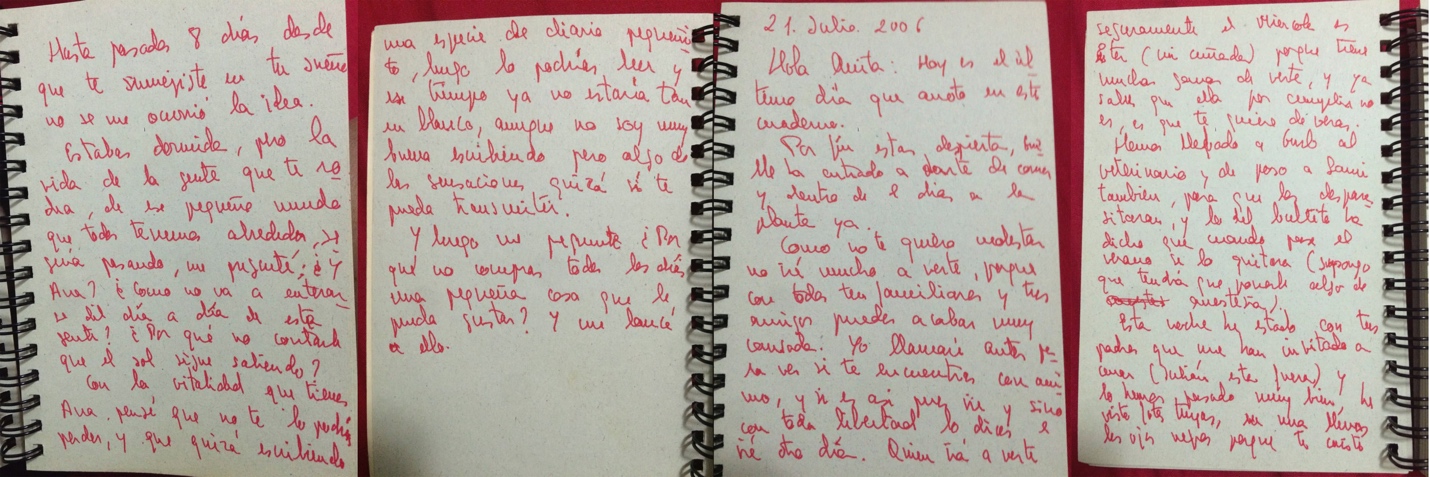
Fueron muchos días en coma. Día a día, mi familia apuntó en una libretita lo que pasaba a mi alrededor mientras yo estaba inconsciente. La libreta me la escribió María, la madre de mi pareja. Si alguna vez le pasara algo parecido a alguna persona que conociera, creo que le gustaría tener algo así. Cada día los médicos daban un parte y ella apuntaba las informaciones del médico y también sus reacciones. Fue un milagro que yo saliera de la Unidad de Cuidados Intensivos, allí estás muy débil y eres muy propenso a coger infecciones. Cuando me dieron la libreta, leí que mientras estuve en coma pasé por un problema en los pulmones del que sólo se salva una de cada diez personas.It was many days in a coma. Day after day, my family wrote down in a little notebook what was happening around me while I was unconscious. The notebook was written for me by María, my partner's mother. If something similar ever happened to anyone I knew, I think they would want to have something like that. Every day the doctors gave an update and she noted down what they said and her own reactions. It was a miracle that I came out of the Intensive Care Unit — there you are very weak and very prone to infections. When they gave me the notebook I read that while I was in a coma I had been through a lung problem from which only one person in ten survives.
Me desperté en la Unidad de Cuidados Intensivos. No entendía dónde estaba hasta que me dijeron que estaba en el hospital La Fe. Alguien me preguntó que si sabía por qué estaba allí, y yo sabía que el tren había tenido un accidente pero no sabía muy bien el qué. Fue entonces cuando me dijeron lo que había pasado. Mi familia había guardado las noticias que se publicaban en el periódico sobre el accidente, así que cuando ya estuve mejor y pude salir de la habitación, pedí que me las trajeran.I woke up in the Intensive Care Unit. I didn't understand where I was until they told me I was in the La Fe hospital. Someone asked me if I knew why I was there, and I knew the metro had crashed. But beyond that I knew nothing. I asked which day of the week it was and they told me it was Sunday. I had been in a coma since Monday.
En la UCI las bombas emiten muchos pitidos, hay ruidos de goteros, de la máquina de respirar y no consigues descansar. Cuando estás despierto no tienes nada que hacer. Estás en una cama sin poder moverte. Miraba hacia arriba y me pasaba todo el día mirando cómo funcionaba el aire acondicionado. Había una ventanita en la cama y dos veces al día venían a visitarme. Mis hermanas, mi pareja, mis padres se turnaban para entrar en la UCI. También vino alguna visita. No sé los nombres, pero personas con cierta responsabilidad en el hospital pasaron por mi habitación y preguntaron por mí.In the ICU the pumps emit endless beeps, there are noises from drips, from the breathing machine, and you can't get any rest. When you're awake there's nothing to do. You're in a bed unable to move, all you can do is wait — wait for the next visit, wait for the next test, wait for them to take you out of there. I was lucky: the people from my partner's side and from my own side took it in turns to be at the hospital. There was always somebody there.
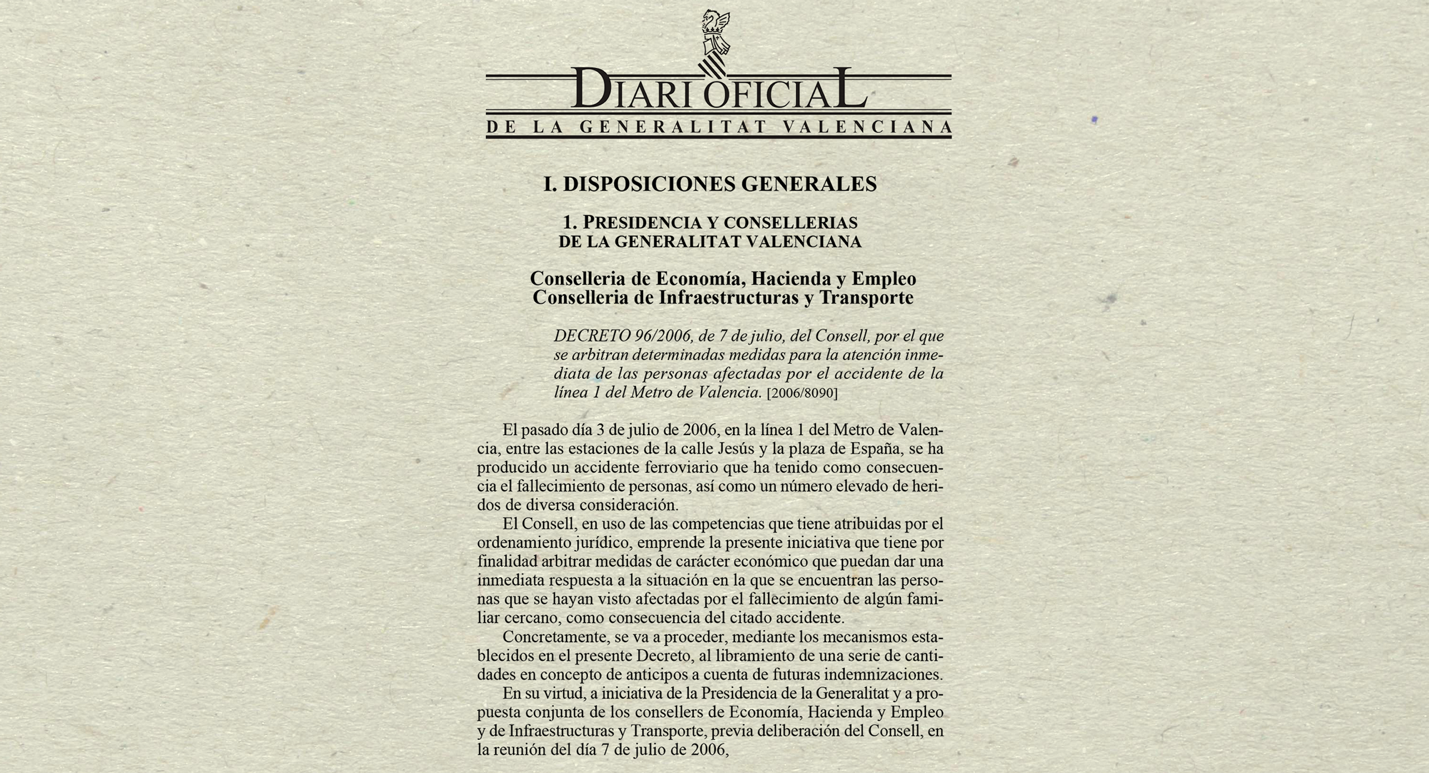
Me molestaban mucho los olores de las personas que venían a visitarme con perfumes, me mareaba, no era capaz de atender a lo que me decían. Por eso di orden de que vinieran las mínimas visitas posibles. Un día llegó mi padre al hospital y me dijo: “Mira, te ha llegado un burofax”. Yo no había oído la palabra burofax en mi vida. No me acuerdo lo que ponía, pero eran sólo dos o tres frases. La verdad, no entendí ni la mitad: “Has tenido un accidente en un tren que es de la Generalitat Valenciana, por lo cual la Generalitat es la responsable subsidiaria de que tu estés en ese estado de salud”. Me iban a indemnizar, eso sí lo entendimos.The smells of the people who came to visit wearing perfume bothered me a lot, made me dizzy; I couldn't take in what they were saying. So I gave orders that as few visitors as possible should come. One day my father arrived at the hospital and said: “Look, a burofax has come for you.” I had never heard the word burofax in my life. I don't remember what it said, but it was only two or three sentences. Honestly, I didn't understand half of it: “You've had an accident on a train belonging to the Generalitat Valenciana, and so the Generalitat is subsidiarily responsible for your being in this state of health.” They were going to compensate me — that part we did get.
En el caso concreto de los heridos, es como un accidente de tráfico. Hay un baremo: ¿Qué eres? Una mujer de 26 años. ¿De qué trabajas? ¿Cuánto ganas? ¿Cuántos días has estado sin ir al trabajo? ¿Cuántos días has tenido que ir a rehabilitación? ¿Cuántas cicatrices tienes? ¿Dónde? ¿Son visibles? ¿Tienes una profesión en la que cuenta la presencia física y te han fastidiado la vida porque tienes una cicatriz? ¿Has perdido un hijo? ¿Es el primero? ¿No es el primero? ¿Puedes tener más hijos? Hay un baremo para cada una de esas cosas, una tabla en la que cada una de esas cosas vale tanto. Al final se hace una suma y eso es la indemnización. Así es.In the specific case of the injured, it's like a traffic accident. There's a scale: What are you? A 26-year-old woman. What do you do for a living? How much do you earn? How many days have you been off work? How much sick pay have you been receiving? How much of a stake do you have? Right, the limp leg, three points; the arm, two points. And they add it up. There's no consideration of the psychological consequences, of the impact on your life, of what you've lost as a person. Just a sum.
Salí del hospital a principios de septiembre. Todos los días, en vez de ir a trabajar, me preparaba con mis zapatillas y mi ropa para ir a rehabilitación. No sabíamos si podría volver a andar pero tenía mucha motivación: “Tengo que volver a andar”. Se me hizo muy pesada esa rutina diaria aunque ahora camino bastante, no puedo correr, pero bueno, medio cojeo, salto, yo qué sé.I left the hospital at the beginning of September. Every day, instead of going to work, I put on my trainers and my clothes to go to rehab. We didn't know if I would be able to walk again but we had to try. Hours and hours of physiotherapy, of effort, of pain, of exercises that seem ridiculous when you watch them from outside but that, when you can't do them, are exhausting.
Yo me centraba en eso, así que no tenía mucha consciencia de lo que había pasado. Ni siquiera me acordaba de que el Papa había estado en Valencia. No sé, tampoco me importaba. Al menos hasta que un día en el periódico vi que se iban a reunir los familiares de las víctimas. Creo que se lo dije a mi padre: “Pues podríamos ir a ver qué pasa, ¿no?».I was focused on that, so I wasn't very aware of what had happened. I didn't even remember that the Pope had been in Valencia. I don't know, I didn't really care. At least until one day my parents told me that the families of the victims had been meeting and that they wanted to get organised. They asked me if I wanted to go.
Fui a la primera reunión en silla de ruedas. Llegamos tarde. La gente contaba lo que había sucedido, cómo los habían tratado o qué les habían ofrecido. “¿Tú has firmado ya o no?”, porque en el caso de los fallecidos, a algunos les ofrecieron firmar el documento con la cantidad de la indemnización al poco tiempo de suceder el accidente. La gente no sabía qué tenía que hacer. Entonces fui consciente: “Madre mía, aquí ha sucedido algo gordo, han muerto 43 personas”. Algunos teníamos abogados, otros no, así que lo que empezamos a discutir en esas primeras reuniones era qué íbamos a hacer con el juicio. Queríamos que se investigara lo que había pasado, porque las cosas no pasan porque sí, no son un fenómeno de la naturaleza.I went to the first meeting in a wheelchair. We arrived late. People were telling what had happened, how they had been treated or what they had been offered. “Have you signed yet or not?” — because in the case of those who had died, some had been offered the compensation document to sign just after the accident. People didn't know what they were meant to do. That's when it hit me: “My God, something big has happened here — 43 people have died.” Some of us had lawyers, others didn't, so what we started discussing at those first meetings was what we were going to do about the trial. We wanted what had happened to be investigated, because things don't just happen — they're not a force of nature.
Las primeras reuniones eran encuentros masivos, estaba todo muy reciente. Había mucho contraste de opiniones, mucha clase de gente distinta porque no creo que haya mucha selección entre la gente que sube un día entre semana en un vagón de un metro. Bueno, a lo mejor había más gente que estuviera desempleada, amas de casa, señoras mayores, estudiantes. No creo que hubiera muchos ejecutivos ese día, a esa hora, en el metro, pero por lo demás había gente de todo tipo de creencias y convicciones políticas.The first meetings were huge gatherings, everything was very recent. There was a lot of clashing of opinions, very different kinds of people — because I don't think there's much selection among the people who get on a metro train at a quarter past one in the afternoon. There was every kind of person and every kind of way of reacting to what had happened.
Yo cogí el metro aquel día porque había tenido un accidente con la bici unos días antes y se me había jodido la rueda. Soy enfermera, cogí el autobús y fui a trabajar. Teníamos una reunión en el hospital La Fe. Cuando terminamos la reunión, almorcé con unas compañeras antes de regresar a casa. Una de mis amigas se volvió en bici. Otra, Marisa, bajó con nosotras al metro pero iba en dirección contraria. Yo iba con Carmen. Nos montamos en el rellano justo detrás del conductor, en el primer vagón. En una parada se subió un chico. No sé, estuvo hablando con la revisora. Por lo demás, no recuerdo a ninguna persona de las que iba en el tren conmigo. Ahora lo pienso y me sabe mal, ¿no? No haberme fijado en la gente que iba en el tren.I took the metro that day because I had had an accident on my bike a few days earlier and the wheel was wrecked. I'm a nurse, so I caught the bus and went to work. We had a meeting at La Fe hospital. When we finished the meeting, I had lunch with some colleagues before heading home. One of my friends went back by bike. Another, Marisa, came down to the metro with us but was heading in the opposite direction. I was with Carmen. We got on the landing right behind the driver, in the first carriage. At one stop a young man got on. I don't know, he was talking to the ticket inspector. Apart from that, I don't remember anyone else who was travelling with me on the train. I think about it now and it bothers me, you know? Not having noticed the people on the train.
Íbamos en el metro tan tranquilos como siempre y de pronto notamos que empezó a ir más rápido. Lo que más recuerdo es cómo traqueteaba. Se movía tan rápido que el vagón entero se giró hacia el suelo y la puerta donde íbamos se abrió. Tengo un flash, me agarraré a Carmen con la mano izquierda e intenté hacer contrapeso hacia el otro lado para no caernos a las vías.We were on the metro as quiet as ever, and suddenly we noticed it began to go faster. What I remember most is the way it rattled. It was moving so fast that the whole carriage turned over towards the floor, and what was the ceiling became the floor. Everything came down at once: people, bags, what they were carrying, everything.
Os habréis caído de pequeños de la bicicleta o de cualquier lado ¿no? Esa sensación de que no puedes respirar durante unos segundos, esa sensación tuve. La luces estaban apagadas, estaba todo oscuro y creo que entonces fue cuando escuché a Carmen llamarme. O a lo mejor las dos nos llamamos y al final ella se acercó a donde yo estaba. Toqué el suelo con las manos y me di cuenta de que estaba sobre las vías del tren. Recuerdo que le dije a Carmen “vamos a movernos, no sea que venga un tren en el sentido contrario”. Pero Carmen no podía arrastrarme y yo tampoco me podía mover. Tenía las dos piernas rotas.You'll all have fallen as children off a bike or off something, no? That sensation of not being able to breathe for a few seconds — that's the sensation I had. The lights were off, everything was dark, and I think it was then that I heard Carmen calling me. Or maybe we both called out to each other and in the end she came over to where I was. I touched the ground with my hands and realised I was on the train tracks. I remember saying to Carmen, “let's move, in case a train comes the other way.” But Carmen couldn't drag me and I couldn't move either. I had both my legs broken.
Tengo otro flash. Estaba en otro sitio. No sé, en el suelo contra una pared. Pienso que debe de ser el andén. El personal sanitario estaba allí. Reconocí a Esther. Esther estudió conmigo enfermería y da la casualidad de que ella trabajaba en uno de los servicios que avisaron para que acudieran de emergencia. Le dije que estuviera allí conmigo porque me daba seguridad conocer a alguien. Le pedí a Esther que llamara a mi casa para avisar que estaba allí. Y ya no recuerdo nada más.I have another flash. I was somewhere else. I don't know, on the ground against a wall. I think it must be the platform. The medical team was there. I recognised Esther. Esther had studied nursing with me and it happened that she worked in one of the services that had been called in for the emergency. I told her to stay there with me, because knowing someone made me feel safer. I asked Esther to call my home to let them know I was there. And that's the last thing I remember.
Miguel Esplugues
padre de Anafather of Ana
El lunes a mediodía sonó el teléfono: “Papá, es para ti, es una tal Esther”. “Dime”. “No sé si te acuerdas de mí, soy una amiga de Ana. Es que ha ocurrido un accidente. Ana está bien, pero iba en el metro”. Me puse muy nervioso. Recuerdo que entré en el hospital La Fe en dirección prohibida, había ido muchas veces a ese hospital porque mis tres hijas han nacido allí, pero en ese momento me pareció el hospital más grande del mundo. Todo eran pasillos y pasillos, nunca se llegaba a ningún sitio. Cuando por fin llegué estaban haciéndole pruebas. Pude verla y hablar con ella hasta que entró al quirófano y eso me tranquilizó mucho. Ana quería saber qué le había pasado a su amiga, la que iba con ella: “Papá es que no lo sabe nadie, pero está embarazada y no sé nada de ella”. Eso fue lo último que me dijo, después pasé más de veinte días sin poder hablar con mi hija.On Monday at midday the phone rang: “Dad, it's for you, it's a girl called Esther.” “Yes?” “I don't know if you remember me, I'm a friend of Ana's. There's been an accident. Ana's all right, but she was on the metro.” I got very nervous. I remember driving the wrong way into La Fe hospital — I had been there many times because my three daughters were born there, but at that moment it looked like the biggest hospital in the world. Everything was corridors and more corridors, you never got anywhere. When I finally arrived they were running tests on her. I was able to see her and speak to her before she went into surgery and that calmed me a lot. Ana wanted to know what had happened to her friend, the one travelling with her: “Dad, nobody knows, but she's pregnant and I have no news of her.” That was the last thing she said to me — afterwards I spent more than twenty days unable to talk to my daughter.
Los médicos salieron del quirófano para decir que la cosa sería larga. Tenía múltiples heridas por el cuerpo, todas con peligro de infección porque tenía aceite y grasa por todos los lados. Mi hija entró en coma inducido y pasó momentos muy difíciles. En uno de ellos oí a la anestesista decir que Ana se había quedado en el quirófano. A la media hora aparecieron otra vez y dijeron que había vuelto en sí, que habían conseguido salvarla. Así estuvimos veinte días de espera, unas veces los médicos me decían que estaba mal y al día siguiente que estaba peor.The doctors came out of the operating theatre to say that it would be a long road. She had multiple injuries all over her body, all of them at risk of infection because she had oil and grease all over her. My daughter was in a very serious condition. The first few days we didn't know whether she would pull through.
Recuerdo que cuatro días después del accidente teníamos en Valencia la vista del Papa. Mi única preocupación era Ana y lo demás no me importaba demasiado. Más tarde sí, más tarde me obsesioné con lo que había pasado y creo que intenté averiguar más de la cuenta.I remember that four days after the accident the Pope was due to visit Valencia. My only concern was Ana, and the rest didn't matter to me much. Later, yes — later I became obsessed with what had happened, with what they had done to us, with the indifference. But at that moment I only thought about my daughter.
En el hospital La Fe nos preguntaron si queríamos recibir a la vicepresidenta del Gobierno. Les dije que no, que yo no recibía a nadie. Llegué a decir que si me visitaba alguien dentro de las dependencias del hospital los denunciaría. Me daba pánico tener que hablar con la prensa. Pero pasaron esos primeros días y fue mucha gente la que pasó a visitar a mi hija, incluido el director general de Sanidad. Mi hija trabajaba para la Generalitat con una beca y con el accidente la perdió. Nos dijo que no nos preocupásemos, que él lo arreglaría. Todo fueron buenas palabras, pero a ese hombre no lo volví a ver más. Ana se quedó sin sueldo, sin beca y sin trabajo.At La Fe hospital they asked us if we wanted to receive the Vice-President of the national Government. I told them no, that I wouldn't receive anyone. I went as far as to say that if anyone visited me inside the hospital I'd report them. I was terrified at the thought of having to talk to the press. But those first days passed and a lot of people came by to visit my daughter, including the regional director general of Health. My daughter was working for the Generalitat on a grant and with the accident she lost it. He told us not to worry, that he would sort it out. Everything was fine words, but I never saw that man again. Ana was left without a salary, without the grant, and without a job.
Ella no era del todo consciente de lo que le había pasado cuando nos llegó el burofax. Yo tenía ocho días para presentarme en la empresa pública de ferrocarriles y presentar una reclamación si no quería perder la indemnización. ¿Pero qué indemnización? Mi hija todavía estaba hospitalizada, no acabábamos de entenderlo. Era julio y la mayor parte de gente estaba de vacaciones, pero conseguí hablar por teléfono con un abogado y me dijo que no presentase nada mientras ella estuviera en el hospital.She wasn't yet fully aware of what had happened to her when the burofax reached us. I had eight days to present myself at the public railway company and to submit a claim if I didn't want to accept the compensation they were offering. Eight days. With my daughter in intensive care.
Esa época pasó y la siguió otra muy dura. Ana iba en silla de ruedas y no teníamos la casa adaptada a sus necesidades. La casa cambió de arriba a abajo: tuve que modificar el coche para que pudiera montarse, reformar el cuarto de baño para construir un plato de ducha y poner manetas. Además, ella necesitaba atención permanente y Guille, su pareja, vivía en Estados Unidos donde cursaba una beca. Lo dejó todo y volvió a Valencia. Renunció a su beca y se vino. Tuvo que devolver el dinero. Fue un cambio total para todos. Mi hija estuvo yendo a rehabilitación casi dos años, todos los días, tenía más de treinta roturas por todo el cuerpo. La operaron muchísimas veces. Los médicos todavía quieren que vuelva a pasar por el quirófano pero ella se ha plantado.That period passed and another, very hard one followed. Ana was in a wheelchair and we didn't have the house adapted to her needs. The house was turned upside down: I had to modify the car so she could get in, refit the bathroom to build a walk-in shower and install grab handles. On top of that, she needed constant care, and Guille, her partner, was living in the United States on a grant. He dropped everything and came back to Valencia. He gave up his grant and came. He had to return the money. It was a total upheaval for everyone. My daughter spent almost two years going to rehab every day; she had more than thirty fractures all over her body. They operated on her many times. The doctors still want her to go back into surgery but she's put her foot down.
Mi hija estaba con muchos dolores, le inyectaban morfina para calmarla y ella me decía que “esos mismos políticos que querían venir cuando yo estaba en la UCI ahora estarán por ahí con sus barcos, mientras yo me jodo con los dolores”. Tenía razón, no sabía qué decirle, así que empecé a escribir al periódico para contarlo. Yo necesitaba encararme con alguien, necesitaba gritar, sacar todas esas cosas que se me acumulaban dentro. Nos dijeron que no había responsables en el accidente, que la única culpa la tenía el conductor. Un conductor que intentó frenar y no lo consiguió, un conductor que llevaba sólo cuatro meses en la empresa. ¿Ése es el único responsable? Yo era una persona muy confiada, yo creía en la justicia, tenía fe en que todo el mundo era bueno. En este momento no creo en la justicia. Lo siento, pero no creo.My daughter was in a lot of pain; they injected her with morphine to calm her, and she would say to me that “those same politicians who wanted to come when I was in the ICU will now be out on their yachts, while I'm here screwed up with the pain.” She was right. I didn't know what to say to her, so I started writing to the newspaper to tell what was happening. I needed to face up to someone, I needed to shout, to get out all those things piling up inside. We were told there were no responsible parties in the accident, that the only one to blame was the driver. A driver who had tried to brake and didn't manage to, a driver who had been with the company for only four months. Is that the only person responsible? I used to be a very trusting person, I used to believe in justice, I had faith that everyone was good. Right now I don't believe in justice. I'm sorry, but I don't.
Quería contarlo, quería sacarlo todo en mis artículos porque estaba en mi derecho de explicar cómo me lo estaban haciendo pasar. Llegaron las elecciones y volvieron a ganar, los políticos decían que la sociedad les había dado la razón, nos dijeron que no eran responsables porque habían ganado las elecciones. Los políticos basaron su estrategia en un refrán que dice que de lo que no se habla, no existe. Y eso hicieron, ni hablar ni contestar. El accidente no existía para ellos.I wanted to tell the story, I wanted to get it all out in my articles, because I had the right to explain what they were putting me through. The elections came and they won again, the politicians kept saying that everything was under control, that responsibilities would be assumed. None of that was true.
Empecé a obsesionarme, me hacía preguntas. Cualquier persona que tiene un pequeño taller, sabe que un fallo mínimo es suficiente para una sanción. Incluso cuando nadie lo denuncia. Empecé a indagar, a preguntar por ahí. Todavía hoy es raro el mes que no busco en internet información que no he leído para ver si me entero de algo más. Y mientras eso ocurra, mientras yo necesite mis pastillitas es que no he superado nada. Este verano intenté cortar con las pastillas pero no pude.I started to obsess, I asked myself questions. Anybody who has a small workshop knows that a tiny fault is enough to get a fine. Even when nobody reports it. I started looking into it, started investigating, and the more I dug, the more I understood that this had not been an accident. This had been a chain of negligences covered up afterwards with a chain of lies.
Dicen que para perdonar hay que saber lo que se perdona y a quíén. ¿Cómo voy a perdonar si no sé lo que ocurrió ni por qué? No puedo perdonar ni olvidar. ¿Cómo puedo perdonarte si no sé quién eres?They say that to forgive you need to know what you are forgiving and whom. How am I going to forgive if I don't know what happened or why? I can neither forgive nor forget. How can I forgive you if I don't know who you are?
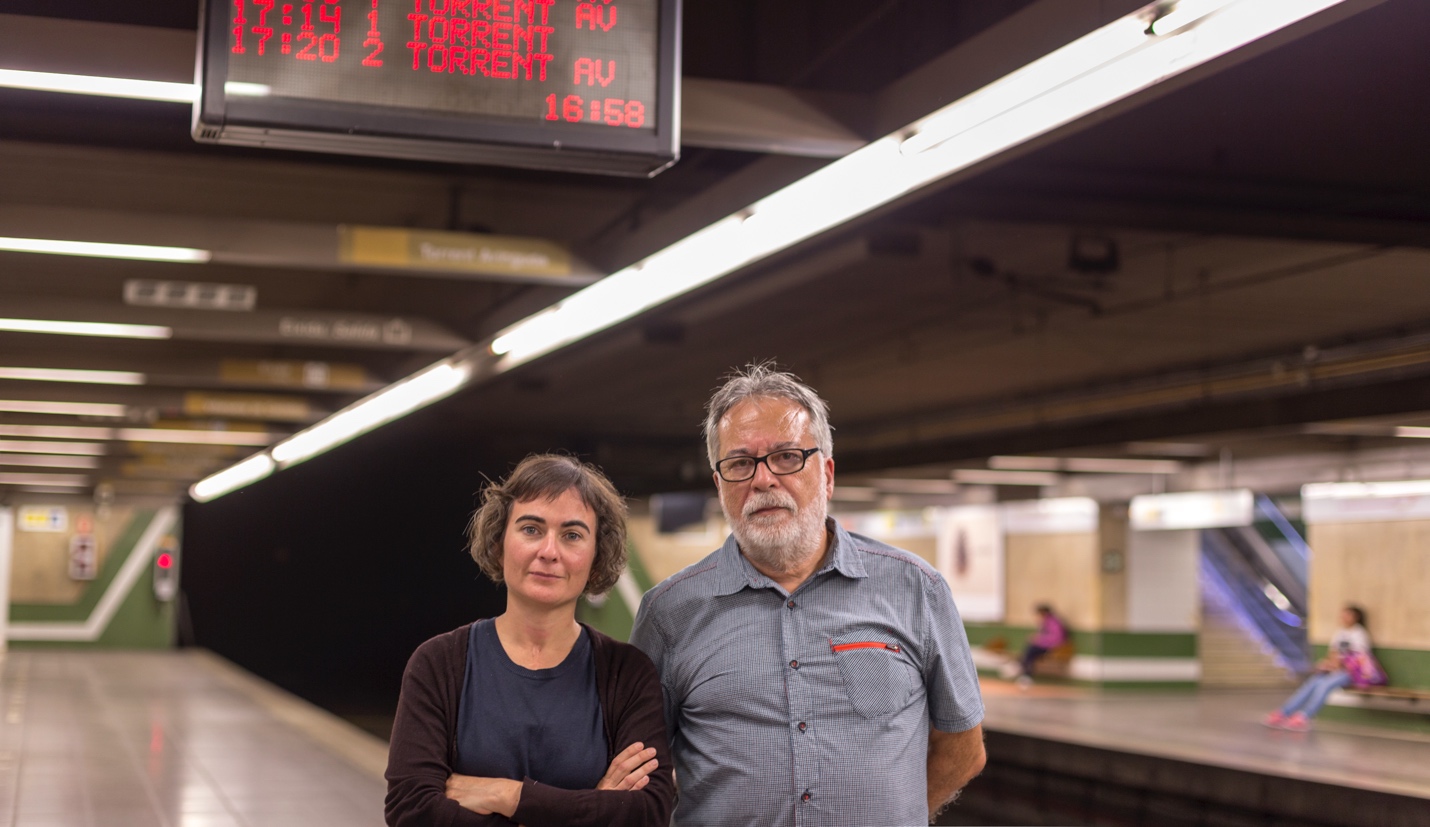
Miguel Ángel Muñoz
hijo de Hipólitoson of Hipólito
Yo no vi a ningún psicólogo. Mi hermano y yo, a pesar del dolor, lo primero que hacemos es informarnos de lo que ha pasado en otras tragedias. Una vez que pasó el funeral y después de incinerar a mi padre empezamos a recopilar información sobre otros casos porque nos extrañaba que la Generalitat nos llamara para cobrar un adelanto. En ese momento estábamos con el duelo, no teníamos ninguna prisa por cobrar. Pero ellos sí tenían prisa en pagarnos. Cosa rara porque en las tragedias se tarda años en cobrar. En la riada del cámping de Biescas, por ejemplo, creo que tardaron en cobrar diez años.I didn't see a psychologist. My brother and I, despite the pain, the first thing we do is find out what has happened in other tragedies. Once the funeral was over and after we cremated my father, we started gathering information on other cases, because it struck us as odd that the regional government was calling us to collect an advance. At that moment we were in mourning, we had no rush to be paid. But they were in a rush to pay us. A strange thing — because in major tragedies it usually takes years to receive compensation. In the Biescas campsite flood, for example, I think it took ten years to pay out.
Pero insistían, insistían e insistían: “Venid a Ferrocarriles”. Fuimos y la hojita que nos dieron para firmar decía que teníamos que renunciar a reclamar responsabilidades a la Generalitat, a Ferrocarriles o a cualquiera de los trabajadores. Yo me quedé mirando y dije: “Vamos a ver, yo vengo aquí a cobrar un seguro obligatorio. Vengo a firmar un recibo que tú me tienes que abonar por ley y punto. Yo no tengo que firmar que renuncio a nada”. Esa hoja la escondieron y no nos dieron copia, esto es algo que digo yo pero que no puedo demostrar. Ése fue el primer contacto con Ferrocarriles.But they insisted, insisted and insisted: “Come to the railway company.” We went, and the little sheet they gave us to sign said we had to renounce any claim of responsibility against the regional government, against the railway company, or against any of its workers. I looked at it and said: “Let's see, I'm coming here to claim a compulsory insurance payment. I'm coming to sign a receipt that by law you have to pay me, full stop. I don't have to sign that I renounce anything.” They hid that sheet away and didn't give us a copy. That's something I say but can't prove. That was the first contact with the railway company.
Estuvimos tres meses aislados. Cada familia tenía una versión. Algunos decían que había gente que les ofrecía trabajo y cosas así. Entonces, ciertos familiares empezamos a ponernos en contacto. El primero al que conocí fue Enric. Tú eliges a tus amigos, aquel día el azar nos eligió. Nos puso allí y juntó a personas que no nos conocíamos de nada. Nos eligieron y aquel día nos hizo tener un objetivo en común.We spent three months in isolation. Each family had its own version. Some said there were people offering them work and things like that. So a few of us relatives started getting in touch. The first thing we did was put together a list with whatever data we could find. Each one had a phone, an address, names. We started to build the network ourselves.
En septiembre, nos enteramos de que en Torrent también habían familiares que se conocían: “Vamos a juntarnos y hacer una convocatoria a la mayoría de los familiares. Pongamos en común la experiencia que hemos pasado en estos tres meses.” Muchísimos familiares acudimos a aquella reunión. Al principio de la reunión, un concejal del PP y otro del PSOE casi se pegan entre ellos. La prensa se habían enterado y también estaba allí. Había familiares que no querían periodistas y había familiares que sí que estaban dispuestos y despotricaron todo lo que pudieron en cuanto vieron un micrófono. Había rabia, se había visto que algo raro había pasado y que no se había informado bien a la gente. Incluso que se había intentado engañar.In September we found out that in Torrent there were also families who knew each other: “let's join up and call a meeting of as many relatives as possible. Let's share the experience we've been through these three months.” A great many relatives came to that meeting. At the start of it, a PP councillor and a PSOE one almost came to blows. The press had got wind of it and were also there. Some relatives didn't want journalists around and others were perfectly willing, and let rip the moment they saw a microphone. There was rage; we'd seen that something strange had happened and that people hadn't been informed properly. That there had even been an attempt to deceive us.
El principio de la reunión fue un poco raro. De hecho, yo fui el que habló en esa reunión. Porque la gente no tenía idea de nada, ni de seguros, ni de qué habían hecho, de nada. A cada uno le habían hecho una cosa. La conclusión que sacamos de esa reunión fue hacer un grupo de trabajo para poner en común todo eso, y convocar otra reunión posterior con más datos. Ese grupo de trabajo fue el germen de la Asociación.The start of the meeting was a bit strange. In fact, I was the one who spoke at that meeting. Because people had no idea about anything — not about insurance, not about what they had been doing, not about anything. Each one had been told a different story. Each one was being treated separately, and that, in the end, was what the railway company and the regional government wanted.
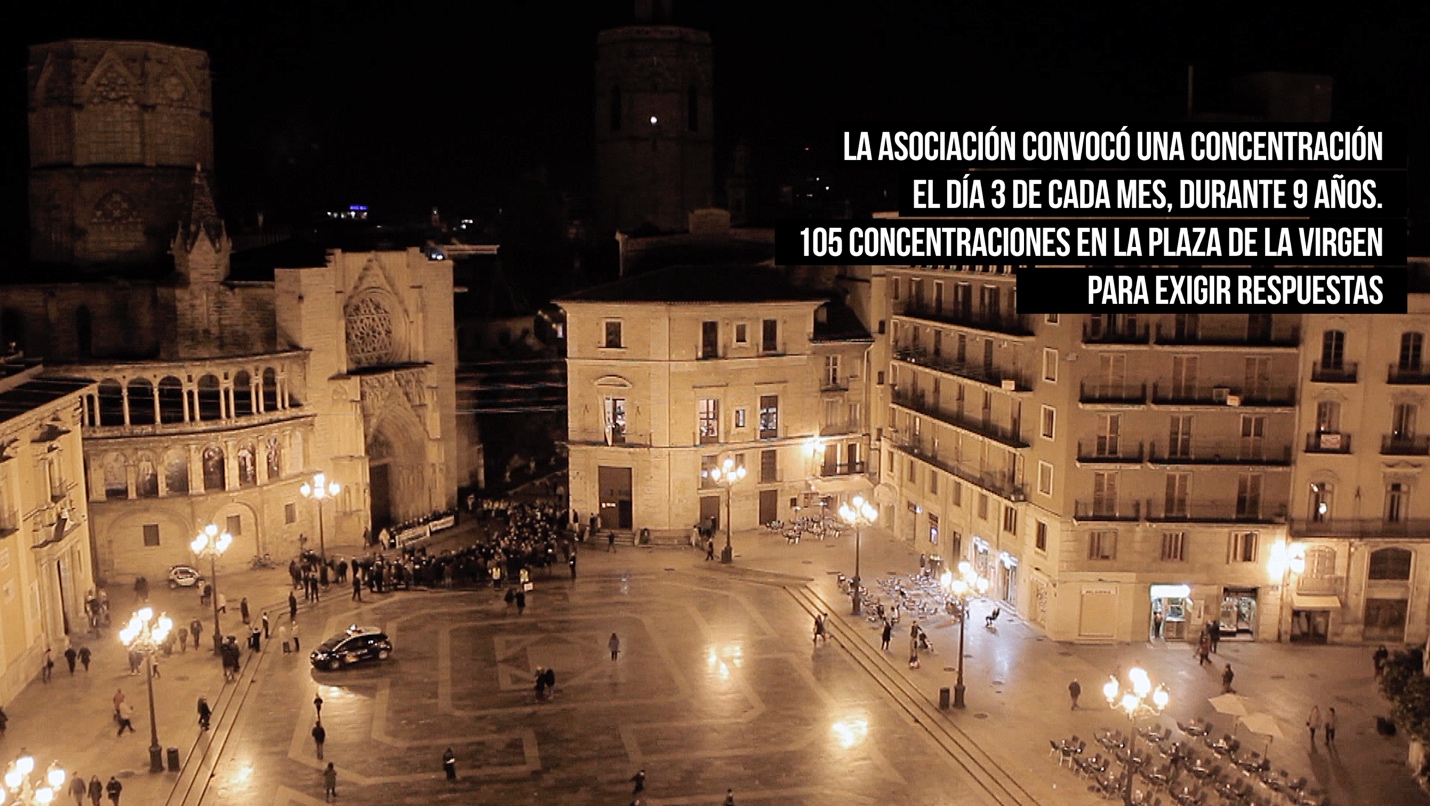
Creo que fue Milagros la que propuso hacer concentraciones todos los días 3. Ahí surgió que el día 3 de cada mes empezáramos lo que luego ha sido nuestra seña de identidad, las concentraciones en la plaza de la Virgen. Se decidió que fuera en la plaza de la Virgen, simplemente por el hecho de que es el centro de Valencia. Nada más. Ubicamos un sitio, de manera que se quede allí, todos los días 3 sobre las 7 de la tarde, y no hace falta estar con convocatorias. Porque hacer una convocatoria costaba mucho, me acuerdo de la manifestación grande que se hizo en Valencia, nos costó mucho.I think it was Milagros who proposed holding monthly gatherings on the 3rd of every month. That's how it began — what later became our trademark: the gatherings in the Plaza de la Virgen on the 3rd of every month. The first time we hardly knew each other. The next time there were more of us. Bit by bit we built the association out of those monthly meetings.
El primer año fue muy duro, tanto para Enric como para mí. El desgaste psicológico y físico fue tremendo. Y luego, el segundo año seguimos porque había mucha gente, de alguna manera eres su voz. Pero llega un momento en que no puedes más, y a los dos años decidimos dejar de estar ahí. Yo un poquito antes que Enric y luego ya es cuando aparece Beatriz y su hermana Rosa.The first year was very hard, both for Enric and for me. The psychological and physical wear was enormous. And then the second year we carried on because there were so many people — in a way you are their voice. But there comes a moment when you can't take any more, and after two years we decided to step away. Me a little before Enric, and that's when Beatriz and her sister Rosa appeared.
Al principio, ponía en primer plano ir los días 3. Pero ahora, si me surge algo… Desgasta mucho y al final uno se cansa. Estás allí, dando la cara y pasa mucha gente diciéndote: “ya habéis cobrado”. Muchas veces, la gente se queda con que si habíamos cobrado o si no. Esto es como hablarle a nadie.At first, I made going on the 3rd a priority. Now, if something else comes up… It wears you down a lot and in the end you get tired. You're there, showing your face, and lots of people walk past saying: “you've already been paid.” A lot of people get stuck on whether we'd been paid or not. It's like talking to no one.
El objetivo inicial, que sigue vigente, era que el accidente del metro no se perdiera en el olvido. Ahí ocurrió algo y nadie había asumido responsabilidades. Ese objetivo se ha cumplido, no me esperaba estar aquí seis años más tarde.The original aim, which still stands, was that the metro accident should not be forgotten. Something had happened there and no one had taken responsibility. That aim has been achieved — I didn't expect that, but in the end it has been achieved. The accident isn't forgotten in València.
Sin embargo, no va a pasar absolutamente nada y nadie se va a hacer responsable del accidente. El verdadero miedo que podía tener el gobierno era perder las elecciones de dos mil siete, poco después del accidente. Las ganaron sin problema y ya saben que esto no les va a repercutir nunca en los votos. La realidad es ésta: esto son daños colaterales de una sociedad que tenemos estructurada así. No hay una verdadera justicia.However, absolutely nothing is going to happen and no one is going to take responsibility for the accident. The real fear the government might have had was losing the 2007 elections, shortly after the accident. They won them without difficulty, and they know now that this won't ever affect their votes. That's the reality of it: these are collateral damage of a society we have structured this way. There is no real justice.
Siempre ganan los mismos, pero hay que dejarlo escrito y al menos algo habrá quedado en las hemerotecas y se sabrá que hubo algo que no se cerró bien. El objetivo final era que no se olvidara. Por eso, creo que la asociación en realidad ya ha conseguido sus objetivos y los ha superado.The same people always win, but you have to leave it written down, and at least something will have been left in the press archives and people will know there was something that wasn't properly closed. The final aim was that it wouldn't be forgotten. So, I think the association has in fact already achieved its aims, and gone beyond them.
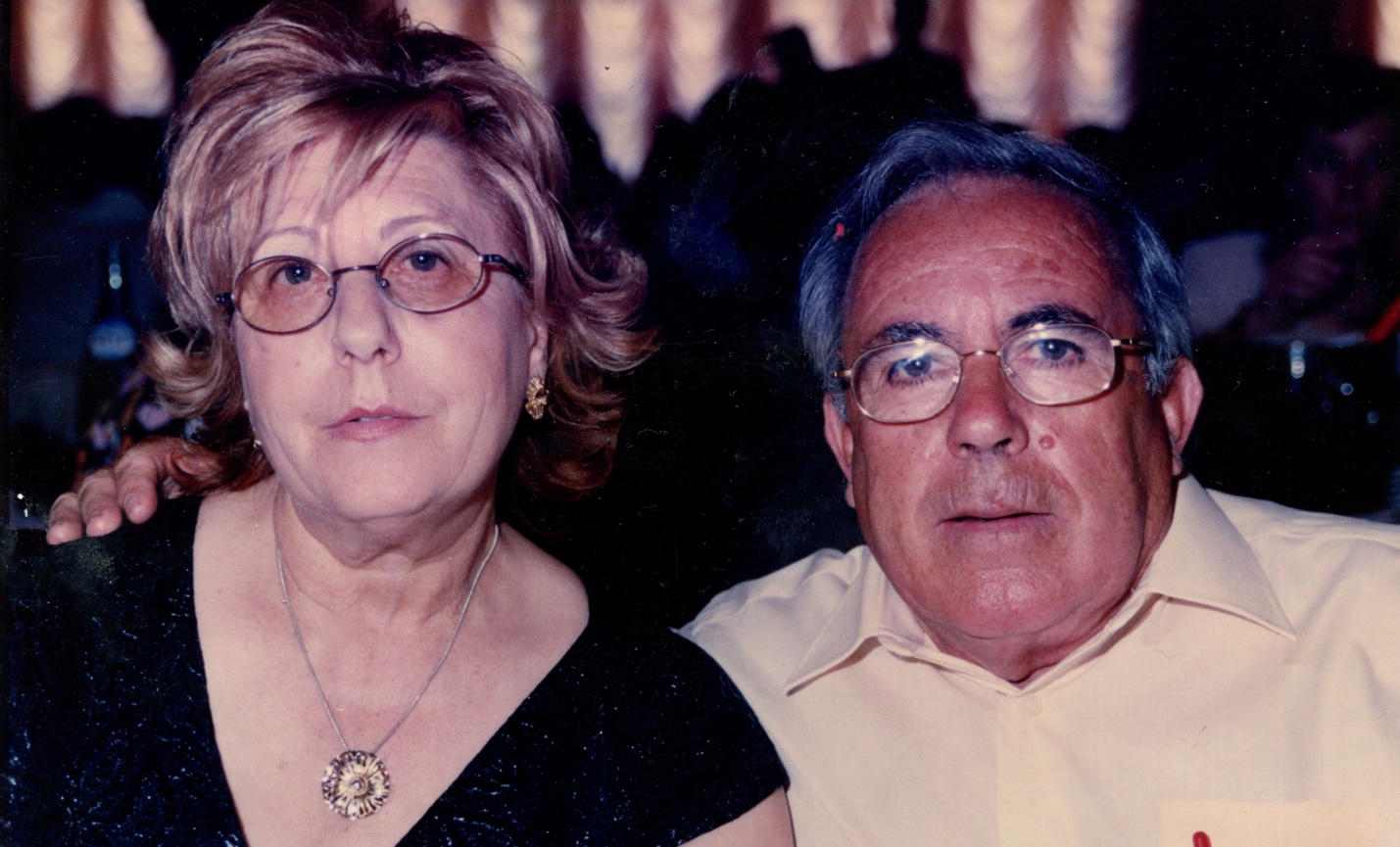
Santiago Muñoz
hijo de Hipólitoson of Hipólito
El 11 de julio fue la primera comparecencia en las Cortes del conseller de transportes. Mi hermano y yo fuimos y la conclusión que sacamos fue que los culpables del accidente eran los propios viajeros por haberse montado en aquel tren. Y así quedó.On 11 July the regional transport minister appeared for the first time before the regional parliament. My brother and I went, and the conclusion we drew was that the people to blame for the accident were the passengers themselves, for having got on that train. And that's how it was left.
La Generalitat anunció que iban a dar un adelanto de 5.000 o 10.000 euros, a cuenta de las indemnizaciones, para las familias que habían perdido su sustento. Nosotros no lo necesitábamos pero todos los días los llamaban. Incluso sé de gente que, una vez que la habían convencido, les decía “ya iré mañana o al otro”. Y no, ya estaba uno con el cheque esperando a la puerta de casa: “Sube, que éste ha dicho que sí”. Y les hacían firmar en el momento.The regional government announced it was going to give an advance of 5,000 or 10,000 euros, on account of the compensation, to families who had lost their main source of income. We didn't need it, but they called them every day. I even know of people who, once they had been talked round, would say “I'll come tomorrow or the day after.” And no — someone was already there with the cheque at the door of their house: “Come up, this one has said yes.” And they made them sign on the spot.
A principios de agosto, recibimos un burofax en el que se determinaba la indemnización total que íbamos a cobrar. Habían resuelto que nos pagaban una cuantía y que con eso se acababa el asunto. Por lo que fuera, habían dicho: “esto lo vamos a tratar como si fuera un accidente de tráfico”. En un accidente de tráfico está totalmente catalogada la indemnización que se tiene que dar en caso de muerte. Y no te van a dar más, vayas al juez que vayas. Si matan a tu hijo con un coche, sólo vas a ver 60.000 euros. Ése es el precio que le han puesto.At the beginning of August we received a burofax stating the total compensation we were going to be paid. They had decided to pay us a sum and that with that the matter was over. For whatever reason, they had said: “we're going to treat this as if it were a traffic accident.” In a traffic accident the compensation for death is completely standardised. And they're not going to give you more, whichever judge you go to. If they kill your child with a car, all you're going to see is 60,000 euros. That's the price they've put on it.
Teníamos 15 días para interponer un recurso. Busca un abogado en 15 días, y en agosto… ¿Eso qué consiguió? Que cada víctima se buscara su abogado. No teníamos otra opción, no nos conocíamos. Hasta septiembre no empezamos a conocernos.We had 15 days to file an appeal. Find a lawyer in 15 days, in August… What did that achieve? It meant each victim had to look for their own lawyer. We didn't have any other option, we didn't know each other. Until September we didn't manage to get organised.
En cualquier tragedia todo se ha tenido que litigar y pelear mediante juicio, durante años, para conseguir que les pagaran indemnizaciones. Y aquí, no llega ni a un mes y ya vienen con la pasta. Empecé a revisar el tema legal sobre seguros. Fui varias veces a Ferrocarriles, a pedirles documentación sobre el seguro obligatorio de viajeros, para saber qué coberturas tenía legalmente. Y notaba que cada vez que iba, se ponían muy nerviosos. Te lo daban, pero había mucho, mucho miedo. Pensaba, “es normal, ha fallecido mucha gente, el asunto aquí debe de estar bastante fastidiado”.In any tragedy, everything has had to be litigated and fought through court for years to get compensation paid. And here, less than a month had gone by and they were already coming with the money. I started looking into the legal side of insurance. I went to the railway company several times to ask for documentation on the compulsory passenger insurance, to find out what cover it legally provided. And I noticed that every time I went, they got very nervous. They handed it over, but there was a lot — a lot — of fear. I thought, “it's normal, a lot of people have died, the matter must be in a real mess.”
Lo curioso era que en el documento que te daban para firmar, había una cláusula donde te obligaban a renunciar a cualquier tipo de acción legal contra la empresa, sus trabajadores… Un párrafo de tres pares de narices. No nos dejaban ni sacar el documento de Ferrocarriles. “Esto de aquí no sale”. Se lo tuvimos que leer por teléfono al abogado. Nos cruzábamos con más víctimas en Ferrocarriles, y les preguntábamos si les pasaba lo mismo.What was curious was that in the document they handed you to sign there was a clause where they made you waive any kind of legal action against the company, its workers… A three-line paragraph that closed off everything.
Encima te ibas enterando de que ofrecían cosas. Iban familia por familia, viendo qué necesidades podían tener. En algunos casos era trabajo, en otros era pagar estudios. A cada familia iba una persona. Con el tiempo, nos enteramos de que a veces iba Cotino. A mi casa no vino nadie. Cotino sí dejó una tarjeta en el tanatorio. Estamos hablando de dos días después del accidente. Apareció allí, se presentó y dejó una tarjeta por si necesitábamos algo. Dijimos: “pues muy bien, adiós. Un conseller de agricultura, ¿qué pinta en todo esto?”.On top of that you found out they were offering things. They went family by family, seeing what needs each one might have. In some cases it was a job, in others paying for studies. One person would go to each family. With time, we found out that sometimes it was Cotino who went. Nobody came to my house. Cotino did leave a card at the funeral parlour. We're talking about two days after the accident. He turned up there, introduced himself and left a card in case we needed anything. We said: “well, all right, goodbye. A regional minister of Agriculture — what does he have to do with all this?”
Ese tipo de cosas se hizo. Y hubo familias que aceptaron. Yo nunca los critiqué. En una situación como la que vivíamos, si a una familia le decían que le iban a pagar estudios o a darles trabajo, ¿cómo le dices si es bueno aceptarlo o no aceptarlo? Yo no estaba en situación de criticar eso. Ni lo estoy. La gente que nos veíamos a menudo creo que lo llevamos mejor.That kind of thing was done. And some families accepted. I never criticised them. In a situation like the one we were living, if a family was told they would pay for their children's studies or get them a job, how can you tell them whether it's right to accept or not? I wasn't in a position to criticise that. Nor am I now. I think the people who saw each other often handled it better.
Quedábamos tres o cuatro veces por semana y hablábamos de temas legales. El que sabía cómo era un procedimiento se lo explicaba a otro. Seguíamos la instrucción judicial, porque había familias personadas y traían la documentación a las reuniones. Nos reuníamos para leer, línea por línea, todo lo que nos podía sonar raro. Por eso surgieron tantas preguntas.Nos enteramos por la prensa de que se habían leído las cajas negras el mismo día. Se llevaron la caja negra a Ferrocarriles, que era la única prueba de que el tren hubiera tenido el accidente por un exceso de velocidad. Entonces, por mi cuenta, decidí ponerme en contacto con Hasler, la empresa que las fabricaba. Les mandé un correo en el que solicitaba información sobre ese tipo de dispositivos. Para mi sorpresa, un ingeniero muy amable de la empresa me contestó: Esas cajas negras se habían dejado de fabricar en 1998 y nadie las utilizaba ya. Soy ingenerio electrónico y en cuanto repasé el manual me di cuenta del tipo de memoria que utilizaban las cajas. Esa memoria no se borraba de la forma en que se había reflejado en la investigación policial. Un técnico de Ferrocarriles había dicho a la policía que cuando los datos se extraían de la caja se borraban automáticamente. Le pregunté eso al ingeniero: ¿Podían borrarse los datos de las cajas cuando los extraías? Me contestó que no. No se borraban a no ser que la siguieses utilizando o a no ser que la borrases manualmente. No se ha podido contrastar esa primera lectura de la caja negra y de hecho, el policía que estaba presente no quiso firmar el acta en su momento. Se lo dije a todo el mundo, incluida la prensa. Pero nadie hizo caso de esto.We met three or four times a week and talked about legal matters. Whoever knew how a procedure worked would explain it to another. We followed the judicial investigation, because there were families who had registered as private prosecutors and they brought the documentation to the meetings. We got together to read, line by line, everything that might sound off to us. That's why so many questions came up. We found out from the press that the black boxes had been read on the same day. They took the black box to the railway company, which was the only evidence that the train had crashed because of excess speed. So, on my own initiative, I decided to contact Hasler, the company that made them. I sent them an email asking for information on that kind of device. To my surprise, a very kind engineer at the company wrote back: those black boxes had been discontinued in 1998 and nobody used them any more. I'm an electronic engineer, and as soon as I went through the manual I realised the kind of memory the boxes used. That memory was not erased the way the police investigation had stated. A railway-company technician had told the police that when the data was extracted from the box it was erased automatically. I asked the engineer that: could the data be erased from the boxes when you extracted it? He told me no. It wasn't erased unless you kept using the box or unless you erased it manually. There has been no way to verify that first reading of the black box, and in fact the policeman who was present refused to sign the report at the time. I told everyone, including the press. But nobody paid any attention to it.
Nunca tuve la sensación de haberme vuelto un conspiranoico. Sólo pensé que habíamos perdido. Habíamos perdido y punto. Era una cuestión de ganar o perder, y nosotros perdimos. Ya sólo nos quedaba ir los días 3 a la plaza. Por si en algún momento algo cambiaba. Por si a alguien le remordía la conciencia y decidía contar algo. Porque seguro que habrá gente que no pueda dormir con este tema.I never felt I had become a conspiracy theorist. I just thought we had lost. We had lost, full stop. It was a question of winning or losing, and we had lost. All that was left to us was to go to the square on the 3rd of every month. Just in case at some point something changed. In case someone's conscience pricked them and they decided to tell something. Because there must be people who can't sleep over this.
Dentro de la empresa de ferrocarriles, había gente que nos pasaba documentación. Las balizas son un dispositivo que se instala en ciertas partes de la vía para que vayan midiendo la velocidad del tren. Si superas una determinada velocidad ese dispositivo automáticamente frena el tren. Con reprogramar una sola baliza se hubiera evitado el accidente. El 3 de julio de 2006, el tren salió acelerando y ya no dejó de acelerar en ningún momento. Si la baliza está mal programada, pues el tren no para.Inside the railway company there were people who passed us documents. The beacons are devices installed in certain parts of the track to measure the train's speed and brake automatically if the limit is exceeded. We discovered that the beacon in the stretch of the accident was badly programmed.
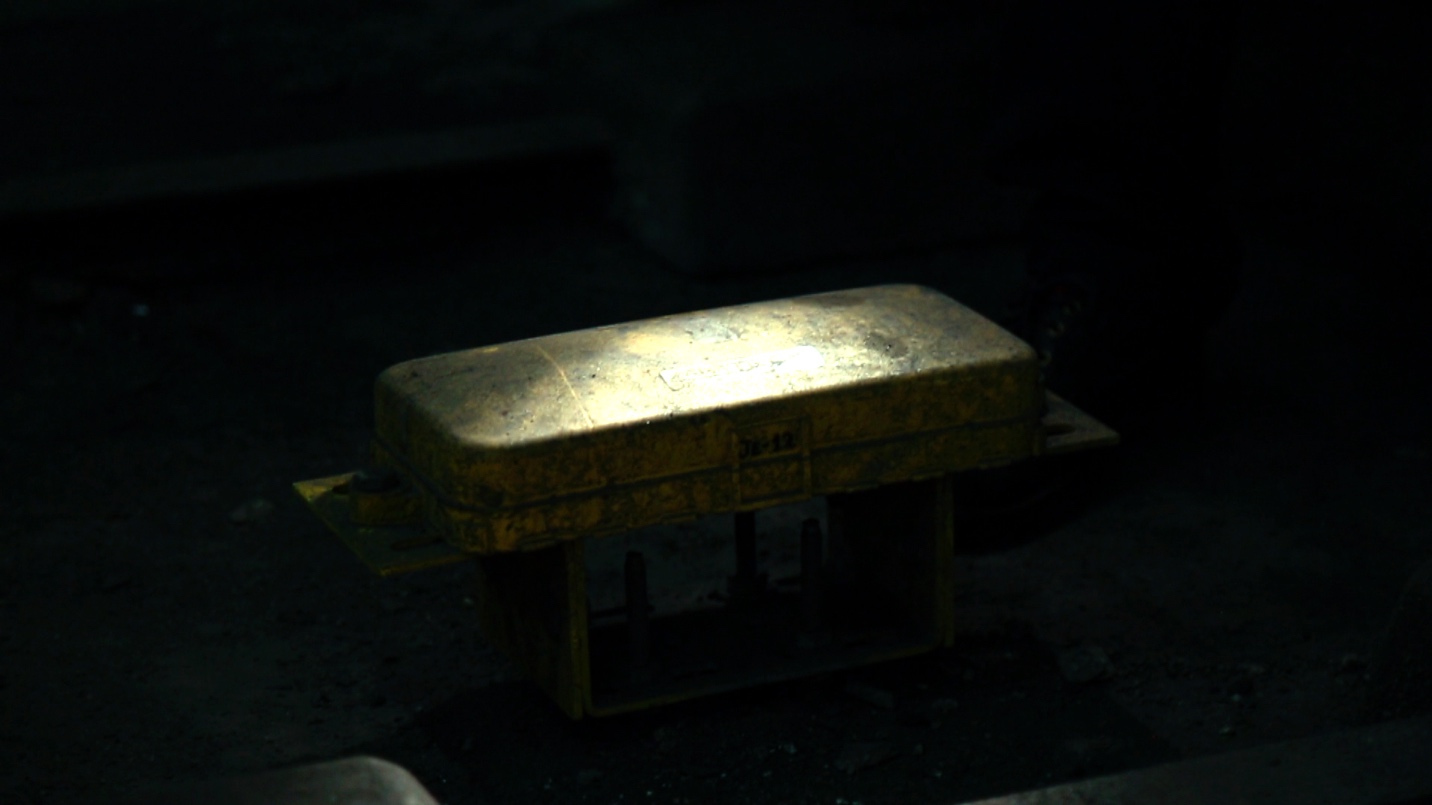
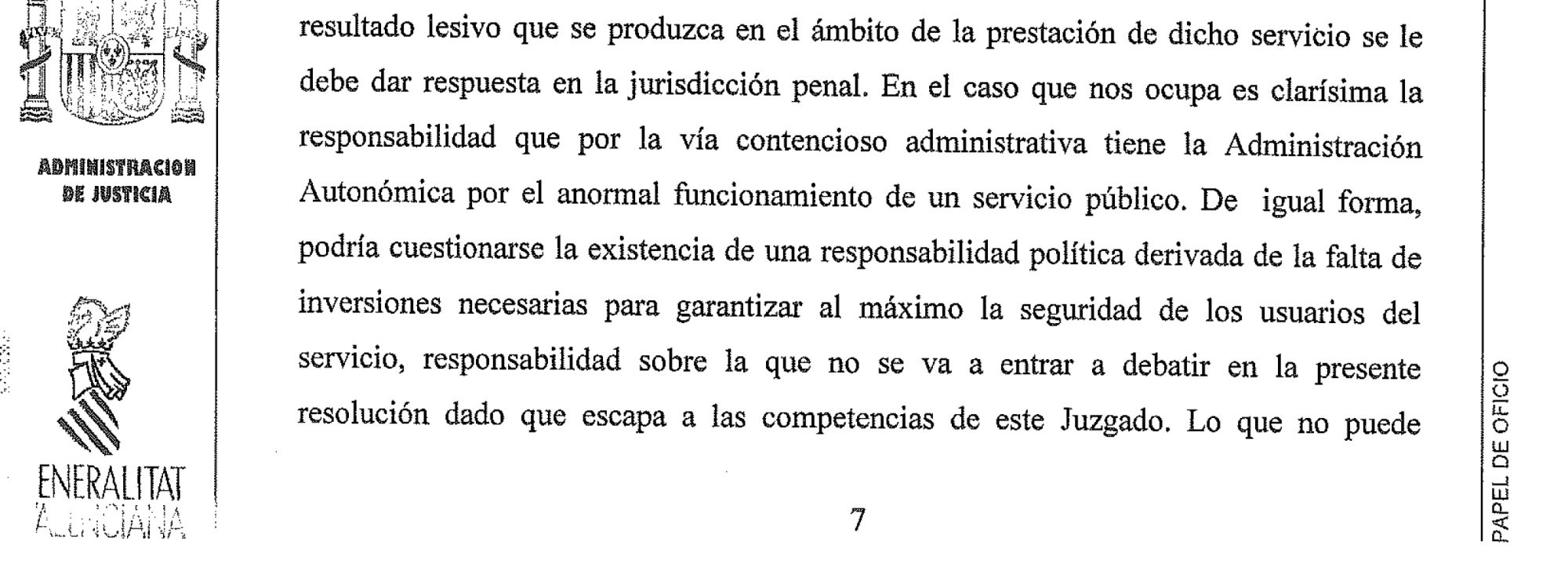
Toda la seguridad se dejaba en manos de los conductores y la jueza en uno de los autos había admitido que el accidente era evitable. Añadía que de ahí podían derivarse responsabilidades políticas, pero que ella ya no entraba en eso. El único culpable es el conductor pero como ha muerto no había responsabilidad penal. No puedes condenar a un muerto.All the safety was left in the hands of the drivers, and the judge had admitted in one of her orders that the accident was preventable. She added that political responsibilities could follow from there, but that she wasn't going to go into that. The only one to blame is the driver, but since he died there was no criminal liability. You can't sentence a dead man.
Trabajamos durante un año y medio. Muchas reuniones, mucha información, montar manifestaciones, montar concentraciones, montar actos. Nos buscábamos la vida, aparte de nuestro trabajo y nuestras cosas, sacábamos tiempo para todo lo demás. El segundo año fue jodido. Me dieron dolores de cabeza, estaba fatal. Tuve que ir al psicólogo. En diciembre paré. Como mi mujer es argentina, me fui a Argentina y estuve allí un mes para desconectar de todo.We worked for a year and a half. Lots of meetings, lots of information, organising demonstrations, organising gatherings, organising events. We worked it out as we went, on top of our jobs and our own lives — we made time for all the rest. The second year was rough. I started getting headaches, I was terrible. I had to see a psychologist. In December I stopped. Since my wife is Argentinian, I went to Argentina and stayed there a month to disconnect from everything.
Al principio, había familiares que se exaltaban muchísimo. Era lógico. La rabia que llevabas dentro. Nosotros tratábamos de ser comedidos, de hablar bien, de no insultar a nadie. Porque si no la gente va a entender la rabieta, vas a ser noticia hoy y mañana se van a olvidar de ti. No, teníamos que dar un mensaje: las cosas no se habían hecho bien. Pero lo que más nos choca es que esa información está ahí. Es una información que es accesible para la gente. Y había mucha gente que estaba con nosotros, pero la gran mayoría, al final… De hecho, ganaron las elecciones. Hicimos una manifestación, intentamos movilizar a muchísima gente, pero no pudimos. Al final, nos quedamos solos.At the start, there were relatives who got extremely worked up. It was logical. The rage you carried inside. We tried to be restrained, to speak well, not to insult anyone. Because otherwise people would put it down to a tantrum — you'd be news today and tomorrow they'd forget about you. No, we had to deliver a message: things had not been done properly. But what shocks us most is that the information is there. It's information that is accessible to everyone. And there were a lot of people who were with us, but the great majority, in the end… In fact, they won the elections. We held a demonstration, we tried to mobilise huge numbers of people, but we couldn't. In the end we were left on our own.
Yo no le echo la culpa a la gente. Me parece lógico, yo en su caso habría hecho lo mismo. Pero cuando no te ha pasado nunca nada, ves desgracias en televisión continuamente, y tampoco te sumas a todas las reivindicaciones. Piensas, “pobre gente, qué putada que no les hagan caso”. Y luego sigues con tu vida. Es algo natural del ser humano. Es así, tampoco es culpa de la gente.I don't blame people. I find it logical, I would have done the same in their place. When nothing has ever happened to you, you see misfortunes on television all the time and you don't take part in all the protests. You think, “poor people, what a rotten deal that nobody pays attention to them.” And then you carry on with your life. It's a natural thing in human beings. It's the way it is — it isn't the people's fault either.
Beatriz Garrote
hermana de Maikasister of Maika
Ese día arrancábamos un proyecto muy importante en el trabajo y teníamos que recibir muchísima información de diferentes empresas instaladoras. Para nuestro departamento, que era el de logística, el nuevo proyecto era la bomba. Estaba centrada en ese tema y me quedé sin batería en el móvil. Me enteré del accidente y los compañeros empezaron a decirme “pues iba para Torrent, ¿no conocerás a nadie?”. Yo no estaba nada nerviosa, sólo pensé en una amiga arqueóloga que excava mucho por el centro de Valencia y que cogía siempre el metro. La llamé y me dijo: “No lo he cogido de milagro porque me he quedado viendo un escaparate de zapatos”. Ya no me preocupé por nadie más.That day we were kicking off a very important project at work, and we had to receive a huge amount of information from various installer companies. For our department — logistics — the new project was huge. I was focused on that, and my mobile ran out of battery. I heard about the accident and my colleagues started saying: “it was on its way to Torrent, do you know anyone?” I wasn't worried at all. I just thought about a friend, an archaeologist, who does a lot of digs around the centre of Valencia and always took the metro. I called her and she told me: “I didn't take it by chance — I stopped to look at a shoe shop window.” After that I stopped worrying.
Mi marido me envió un correo en el que me pedía que le llamara, pero yo no vi ese correo hasta las dos horas o así y cuando hablé con él me dijo: “tu sobrina Violeta va en el metro y está bastante grave”. Entonces, llamé a mi hermana Maika y su móvil no daba señal. Llamé a mi cuñado y me dijo que a Violeta la habían encontrado, que estaba bastante grave, pero que no sabían nada de mi hermana. Los compañeros y mi jefe me preguntaron “¿qué te pasa?”, pero yo no podía ni hablar. Le pedí a Nacho, mi marido, que viniera a por mí. Dejé todo el proyecto apartado que era muy importante y nos fuimos a buscarla. Me hace gracia lo imprescindible que te crees a veces hasta que la vida te pone en tu sitio.My husband sent me an email asking me to call him, but I didn't see it for about two hours, and when I did speak to him he said: “your niece Violeta was on the metro and is in a serious condition.” I called my sister Maika and her mobile gave no signal. I called my brother-in-law and he told me Violeta had been found, that she was in a serious condition, but that they knew nothing about my sister. My colleagues and my boss were asking me “what's wrong?” but I couldn't even speak. I asked Nacho, my husband, to come for me. I left aside the whole project that was so important and we went to find her. It makes me smile how indispensable you think you are sometimes — until life puts you back in your place.
Mi hermana Rosa estaba en un hospital y mi hermana Mila, la mayor, estaba en la Ciudad de la Justicia, donde se supone que estaban llevando los cadáveres. Decidí irme con ella para que si Maika aparecía allí no estuviera sola.My sister Rosa was at a hospital, and my sister Mila, the eldest, was at the City of Justice, where the bodies were supposedly being taken. I decided to go with her, so that if Maika appeared… well, I don't even know what I was thinking. I just went.
Te crees que alguien va a tenerlo todo muy controlado y te va a dar información que necesitas saber. Y no digo que sea negligencia de nadie, pero en ese momento nadie tenía información. Los profesionales –policías y forenses– que había allí, todavía estaban intentando identificar quiénes eran. Hacíamos colas e íbamos dando descripciones de los cuerpos de los familiares. Allí nadie te daba información, lo que estaban intentando era recopilarla para identificar a los muertos.You believe that someone is going to have everything under control and is going to give you the information you need to know. And I'm not saying it was anyone's negligence, but at that moment nobody had any information. Professionals were saying contradictory things to us. The same person would tell us one thing and a different thing within an hour.
Vi a una chica a la que conocía y le dije “¿tú también?”. Ella me giró la cara. En ese momento pensé, “qué raro” pero, acto seguido, a mí me pasó lo mismo con los psicólogos. Y es que en ese momento no quieres hablar con nadie, ni que nadie te consuele, ni compartir experiencias. Lo único que quieres es escapar de ahí y que te digan que a ti no te ha tocado.I saw a girl I knew and I said: “you too?”. She turned her face away from me. In that moment I thought: “how strange.” But then the same thing happened to me with the psychologists. Because at that point you don't even want to be looked at. You just want to be left alone with your dead.
Hasta noviembre o diciembre no empezamos a salir del dolor personal. El 3 de diciembre hicieron una manifestación en Torrent. Nos llegó a mi hermana Rosa y a mí la información de que iba a ocurrir. Dijimos, pues bueno, es el momento de engancharnos. Pensábamos que había que hacer algo porque no estábamos satisfechas con cómo se había tratado todo. A partir de ahí, apuntamos un un par de teléfonos y empezamos a mantener contacto con la gente. El 3 de enero hubo otra concentración y desde entonces estuvimos en todas. Sentíamos la necesidad de exigir respuestas, veíamos que si no las exigíamos no nos las iban a dar.Until November or December we didn't start to come out of our personal grief. On 3 December there was a demonstration in Torrent. My sister Rosa and I got word it was going to happen. We said, well, this is the moment to get involved. We thought something had to be done, because we weren't satisfied with how everything had been handled. From that point on, we noted down a couple of phone numbers and started keeping in touch with people. On 3 January there was another gathering and from then on we were at all of them. We felt the need to demand answers — we saw that if we didn't demand them, they weren't going to give them to us.
Ha habido gente que se ha acercado más tarde, cuando el cuerpo se lo ha permitido. O bien son heridos que han sobrevivido y para ellos es un shock hacer frente a esto y cargar con este lastre, o es gente que ha perdido a alguien. Cada uno tiene su tiempo para acercarse a la asociación. Incluso hay gente que ha decidido no hacerlo, porque no ha podido y ha necesitado mirar a otro lado para seguir hacia adelante con su vida.There have been people who came closer later, when their bodies let them. Either they are injured survivors who have lived through this and for whom facing it and carrying this weight is a shock, or they are people who couldn't bear it during the early years. We have welcomed everyone, whenever they could come.
Para mí, como presidenta, mi hermana ha sido un apoyo total. Yo siempre me siento culpable por las cosas que no llego a hacer o que decido no hacer porque también tengo una familia que cuidar en casa, sobre todo por mis dos hijas. Yo tiendo a desestabilizarme mucho, a estar en unos momentos a tope y en otros momentos no poder con el tema. Me encantaría pasar de todo, me encantaría. En agosto, que es cuando totalmente desconectamos de la Asociación, cuando vuelvo es cuando digo: “ostras, qué bien he estado sin saber nada de este tema”. Pero es que simplemente no puedes quedarte de brazos cruzados y asumir que esto se quede así. Que unas personas, por sus decisiones, por dejación, por incompetencia, por muchos factores que confluyeron, provoquen 43 muertos y no den la cara.For me, as president, my sister has been a total support. I always feel guilty for the things I can't manage to do, or that I decide not to do, because I also have a family to look after at home — above all my two daughters. I tend to swing a lot — at some moments I'm flat-out and at others I can't deal with this at all. I would love to drop everything, I really would. In August, when we completely disconnect from the Association, when I come back I find myself saying: “gosh, what a relief it's been not to know anything about this.” But you just can't sit on your hands and accept that this is left as it is. That some people, through their decisions, through dereliction, through incompetence, through many factors that came together, cause 43 deaths and don't face up to it.
Eso es lo único que nos sirve y para lo que estamos todos. Hay algunos que creen que llegará el día y hay otros que creen que no va a llegar nunca pero pese a eso hay que seguir intentándolo. Yo estoy convencida de que llegará el día, lo que no sé es cuándo llegará, pero estoy convencida de que va a llegar. Es imposible quedarse con los brazos cruzados. Me gustaría pasar de todo y estoy cansada, pero me quedaría mucho peor pensando que se va a quedar así. Que nadie va a asumir la responsabilidad porque nadie le va a exigir que la asuma. Por eso hay que estar ahí.That is the only thing that helps us, and the only thing we are all here for. Some believe the day will come, others believe it never will, but despite that we have to keep trying. I am convinced the day will come — what I don't know is when, but I'm convinced it will come. It's impossible to sit on your hands. I would love to drop everything and I'm tired, but I would feel much worse thinking it's all going to be left as it is. That nobody is going to take responsibility because nobody is going to demand it of them. That's why you have to be there.
Rosa Garrote
hermana de Maikasister of Maika
Mi hermana y yo éramos gemelas, estábamos muy unidas. Estuve dos o tres meses ausente. No es que no me implicara, es que no tenía conciencia de que había algo más. Yo estaba intentando convivir con esa nueva situación. Cuando mi sobrina salió del hospital, yo estaba pendiente de ella y de mi cuñado para lo que necesitaran. Nos volcamos con la chiquilla. Tenía once años en aquel momento y nuestro esfuerzo fue para que lo notara lo menos posible y eso es lo que nos consuela, ver que ella no se ha resentido, o se resiente lo menos posible.My sister and I were twins, we were very close. I was absent for two or three months. It's not that I wasn't involved — it's that I had no awareness that there was anything else. I was trying to coexist with this new situation. When my niece left the hospital I was looking after her and my brother-in-law for whatever they needed. We threw ourselves into looking after the little girl. She was eleven at the time, and all our effort went into making sure she noticed it as little as possible — and that is what consoles us, seeing that she hasn't been damaged by it, or as little as possible.
A los 3 o 4 meses, en diciembre creo que fue cuando mi hermana Beatriz y yo empezamos a intentar aterrizar y ponernos en contacto con la realidad. Sabíamos que había habido una primera reunión de todos los familiares. Vimos por los periódicos que en diciembre se iba a realizar una concentración de la Asociación de Víctimas del Metro. Acudimos a la concentración y nos pusimos en contacto con algunos miembros, para que nos avisaran de las reuniones y para entrar a formar parte de la Asociación.Three or four months in, I think it was in December that my sister Beatriz and I began trying to land and to make contact with reality. We knew there had already been a first meeting of all the families in Torrent. From there on we started attending.
Ya son muchos años, mes a mes. No es sólo ir el día 3, es que yo soy un miembro muy activo de la Asociación y tengo mucho trabajo. Tienes que dedicar mucho tiempo pero mi familia me ayuda. Es algo que necesito hacer: buscar de primera mano las respuestas.It's been many years now, month by month. It's not just about going on the 3rd — I'm a very active member of the Association and have a lot of work. You have to dedicate a lot of time, but my family supports me. It's something I need to keep doing.
A raíz de tener esas preguntas, de intentar averiguar y de ver el comportamiento de la dirección de Ferrocarriles y del gobierno valenciano, me surgieron otros sentimientos. Pero en mi caso nunca ha sido rabia, ha sido impotencia y frustración. Si en una empresa hay un fallo de seguridad, hay una investigación, hay un juicio, hay unas represalias o unas medidas contra el empresario que no ha puesto las medidas de seguridad. Pero cuando quien falla es la administración pública, ahí no hay nada que hacer.From having those questions, from trying to find out and from seeing the behaviour of the railway company's management and the regional government, other feelings arose in me. But in my case it has never been about hatred. It has been about needing to know.
Hay gente que se ha tenido que desvincular porque no puede soportar una pelea tan larga sin poder pasar página en ese sentido. Necesitan aislarse. De momento, yo funciono al revés. Necesito luchar y buscar ess respuestas y, hasta que no las obtenga, creo que no voy a parar. A los 2 ó 3 meses, me hubiera bastado con saber lo que pasó, pero hoy en día necesito algo más. Necesito que se reconzca la labor de la Asociación. Necesito que se reconozca que se ha intentado tapar el accidente. Ellos lo sabían y lo han ocultado, han intentado no buscar, no ir más allá. Necesito las dos cosas.There are people who have had to step away because they can't bear such a long fight without being able to turn the page. They need to isolate themselves. For now I work the other way round. I need to fight and to seek those answers and, until I get them, I don't think I'm going to stop. At two or three months in, it would have been enough for me to know what had happened, but today I need something more. I need recognition of the work the Association has done. I need recognition that there has been an attempt to cover up the accident. They knew it and they've hidden it, they've tried not to look, not to go further. I need both things.
Han pasado seis años y estamos igual que el primer día. Aunque hayan pasado seis años, tenemos las mismas premisas, las mismas inquietudes, las mismas reivindicaciones. No es sólo mi dignidad como ciudadana. A mí lo que me gustaría de verdad es poder disfrutar de la compañía de mi hermana. Pero por lo menos, que su muerte no haya sido en vano. Que tengan la decencia de corregir la deficiencia que hubo en la línea 1 del metro y que algo así no vuelva a suceder.Six years have passed and we are exactly the same as on the first day. Even though six years have gone by, we have the same premises, the same concerns, the same demands. It is not only my dignity as a citizen — it is the dignity of my sister and of all those who are no longer here.
Amparo Medina
hermana de Rosasister of Rosa Medina
En los juzgados fue bastante jodido. Nos dieron un Valium, yo no me lo tomé. Llegaron los políticos y hasta que no se fueron no empezaron a llamar a la gente. Fuimos de los primeros. Pero no la pudimos ver, no nos dejaron. Nos dijeron que ya la habían identificado por las huellas dactilares. Mi sobrino quería verla pero no nos dejaron. No ver el cuerpo hace que no te creas la muerte. Cuesta más reconocer que esa persona ya no está.At the courts it was pretty awful. They gave us a Valium; I didn't take it. The politicians arrived and until they left they didn't start calling people in. We were among the first. But we couldn't see her — they wouldn't let us. They told us they had already identified her by her fingerprints. My nephew wanted to see her but they didn't let us. Not seeing the body makes you not believe the death. It's harder to accept that the person is no longer here.
Empezaron a pasar cosas extrañas, como el primer burofax que recibió mi cuñado: le daban un dinero anticipado, y después ya se vería. Intentaban que firmáramos cosas. Lo veíamos todo muy precipitado y no estábamos para esas historias. Yo empezaba a tener mucho mareo. Algunas visitas, no entendía a qué venían. Me refiero a los técnicos de la Generalitat, que yo en esos momentos no estaba para verlos. Después vino la reunión, y poco a poco nos fuimos introduciendo. La Asociación se hizo poco a poco, para unificar informaciones, aclarar a la gente.Strange things began to happen, like the first burofax my brother-in-law received: they were giving him money in advance, and then we'd see. They were trying to get us to sign things. We saw it all as very rushed and very strange.
Más tarde vino Juan Cotino a casa de mi cuñado, junto a otro político del PP de Torrent. Cotino se presentó como coordinador de lo que había pasado con el accidente. El motivo de la visita se lo tendrás que preguntar a ellos.Later Juan Cotino came to my brother-in-law's house, together with another PP politician from Torrent. Cotino introduced himself as the coordinator of what had happened with the accident. You would have to ask him what the purpose of the visit was.
Un grupo de víctimas convocó una reunión en el ayuntamiento de Torrent. No sabíamos a qué íbamos, simplemente fuimos. La gente estaba llorando, no entendía nada.A group of victims called a meeting at the Torrent town hall. We didn't know what we were going to, we just went. People were crying, nobody understood anything.
¿Sabes lo que es oir chillar, llorar? Eso fue la primera reunión. A la segunda, no sabía si ir o no. Estaba mal, y escuchar el dolor de los demás, en ese momento no me apetecía mucho. Pero teníamos muchas incógnitas, no sabíamos qué había pasado. En mi familia no nos habíamos preocupado por lo que había pasado, estábamos con el dolor de la pérdida. Fue allí cuando tuvimos algo más de información.Do you know what it's like to hear people screaming, crying? That was the first meeting. By the second, I didn't know whether to go or not. I was unwell, and listening to other people's pain wasn't what I wanted at that moment. But we had a lot to do together.
A nivel de colectivo y a nivel personal, hemos avanzado. La situación de duelo que tenía en ese momento ha avanzado y no me encuentro igual. Cada día 3, aparte de la reivindicación, tiene un coste personal. Recuerdas continuamente lo que has vivido, lo que has sentido. Voy superándolo.As a collective and personally we have moved on. The state of mourning I was in then has shifted, and I'm not in the same place. Every 3rd, beyond the public demand, has a personal cost. It costs to be there. But it costs more not to be there.
¿Hasta cuándo estaré? No lo sé. Mientras pueda, iré cada día 3. La gente me pregunta. Cuando cuentas lo que pasa suena un poco extraño, ¿no? Es muy extraño y pienso: “no sé si me creen o no”. Pero es lo que hay. No sé si somos valientes o qué somos. Somos humanos, simplemente somos humanos.Until when will I be there? I don't know. As long as I can, I'll go every 3rd. People ask me. When you tell them what happens it sounds a bit strange, doesn't it? It is very strange and I think: “I don't know if they believe me or not.” But it is what it is.
¿Ahora qué espero? Nada. Al principio sí que esperaba mucho. Esperaba que hubiesen sido responsables, que hubiera ética. No hay ética. No sé lo que hay. Es muy difícil transmitir lo que siento. Yo no sé qué ha pasado y eso es lo que quiero saber. Han muerto 43 personas y 47 personas están heridas, en un proceso que no sabemos cuándo va a acabar.What do I expect now? Nothing. At the beginning I did expect a lot. I expected them to have been responsible, that there would be ethics. There are no ethics. I don't know what there is. It's very hard to convey what I feel. I don't even know it myself.
Francisco Manzanaro
marido de Rosa Medinahusband of Rosa Medina
Sé que aparecimos en la Ciudad de la Justicia pero si quieres que te diga cómo, no me acuerdo. Mi cuñada dice que nos llevaron en un autobús. Del tiempo que transcurrió desde la estación de metro hasta los juzgados, donde estaban depositados los cadáveres, no me acuerdo. Allí estábamos, esperando para identificar a nuestro familiar, y aquello se demoraba y se demoraba. Estaba allí el grupo de turno de políticos. Claro, estarían allí para salir en la tele y decir que estaban al lado los afectados y tal. Y cuando les pareció, dijeron: “Bueno, nos vamos a ir, ya podéis empezar a llamar a los familiares”. Tuvieron la santa cara de tenernos allí esperando, hasta que decidieron irse.I know we ended up at the City of Justice, but if you want me to tell you how, I don't remember. My sister-in-law says they took us in a bus. Of the time that passed from the metro station to the courts, where the bodies were laid out, I have no memory. There we were, waiting to identify our relative, and the wait dragged on. The crew of politicians of the day was there. Of course, they would have been there to appear on TV and say they were with the victims, etc. And whenever they pleased they said: “right, we're off, you can start calling in the relatives now.” They had the sheer cheek to keep us waiting until they decided to leave.
Nos pasaron a una sala y empezaron a llamarnos. Yo no entré, ni dejé entrar a mi cuñada ni a mi hijo. El médico forense nos dijo que no la íbamos a reconocer, que nos íbamos a llevar una mala imagen, y que era mejor que no entráramos. Mi hijo quería entrar, mi cuñada también. Yo estimé oportuno no entrar. Porque si no vas a poder reconocer a la persona, y llevarte una mala imagen… Así que evité que mi hijo entrara. Yo no vi a mi mujer.They moved us into a room and started calling us in. I didn't go in, nor did I let my sister-in-law or my son go in. The forensic doctor told us we wouldn't recognise her, that we would be left with a bad image, that it was better not to. We trusted him. And since then we haven't seen her again.
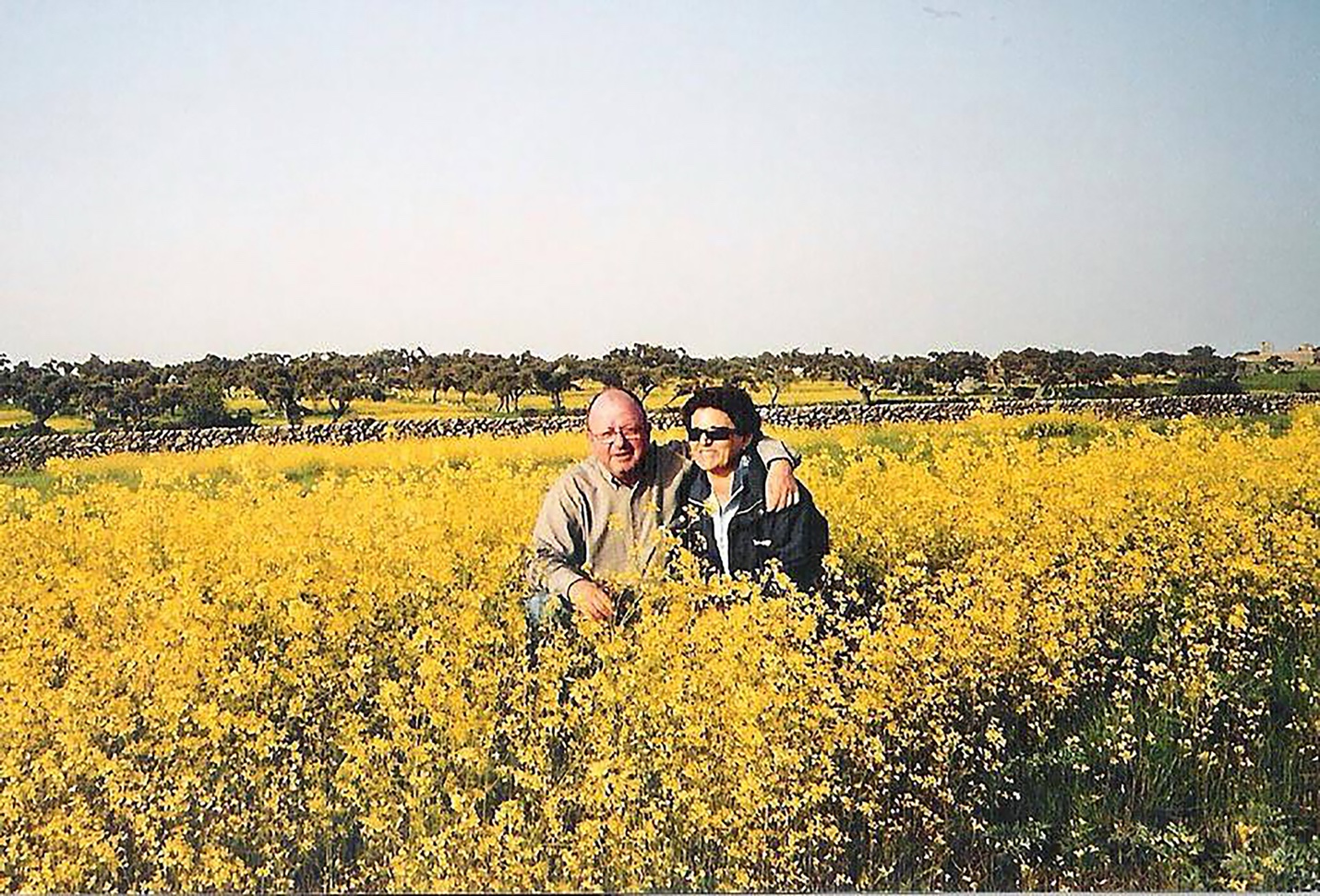
El accidente fue un lunes, y el sábado era cuando venía el Papa. Me llamaron tres o cuatro veces, para decirnos que tendríamos un lugar privilegiado en la misa, que el Papa estaría con nosotros. Yo pasaba del Papa. “¡No me vuelva a molestar!”, dije. Me llamaron tres o cuatro veces más porque querían estar allí para lo de siempre, la foto, no para apoyarnos.The accident was on a Monday, and on the Saturday the Pope was coming. They called me three or four times to say we would have a privileged place at the mass, that the Pope would be with us. I told them that for me the Pope was someone we couldn't have anything to do with at that moment, and that we weren't going to any mass.
Hubo un macroentierro. Acudieron casi todos los afectados. Nosotros, y creo que alguna familia más, no quisimos. Para nosotros era un tema íntimo y no queríamos estar ahí para que ellos se hiciesen la foto. Cuando ocurre una desgracia de estas, los políticos en seguida aparecen. Después ya no les ves el pelo, ni dan la cara por nada. Pero esos días sí, para salir en la televisión y demostrar que están con la gente. Pero eso es mentira. No hemos tenido apoyo de ningún tipo y los únicos contactos que hemos tenido han sido siempre por interés, eso lo tengo claro. La sensación que yo he tenido es que han intentado comprarnos para que nos calláramos y dejáramos el tema olvidado.There was a mass funeral. Almost all the victims took part. We — and I think one other family — chose not to. For us it was a private matter and we didn't want to be there so that they could have their photo. When something like this happens, the politicians appear straight away. After that you don't see hide or hair of them, they don't show their face for anything. But on those days, yes — to be on television and show that they're with the people. But that's a lie. We've had no support of any kind, and the only contact we've ever had has always been out of self-interest, of that I'm sure. The feeling I've had is that they tried to buy us off so that we would shut up and let the matter be forgotten.
En mi casa estuvo Juan Cotino con un concejal del ayuntamiento de Torrent, “para ver cómo estábamos”. Me llamaron, que querían venir a casa. Estábamos mi cuñada, mi hijo y yo. Hasta que se fueron no nos dimos cuenta de a lo que habían venido realmente. Venían preparados, sabían perfectamente quiénes éramos. Sabían que mi hijo tenía la carrera de administración de empresas, lo sabían todo. Y claro, te ofrecen un puesto de trabajo, pero por otra parte nos preguntaban si nos íbamos a personar en el proceso judicial. Yo no sé cómo catalogar esa forma de apoyar a la gente. Ese día, interpreté que una cosa era en compensación por la otra. No nos lo dijeron claramente, pero fue lo que yo interpreté. Por supuesto, no quisimos seguir con aquello. Les dijimos que no, que no queríamos un puesto de trabajo.Juan Cotino was at my house with a councillor from Torrent town hall, “to see how we were.” They called me to say they wanted to come to the house. My sister-in-law, my son and I were there. Not until they left did we realise what they had really come for. They came prepared, they knew perfectly well who we were. They knew my son had a degree in business administration, they knew everything. And of course, they offer you a job, but on the other hand they were asking us whether we were going to register as private prosecutors in the legal case. I don't know how to describe that way of supporting people. That day I read it that one thing was in exchange for the other. They didn't say so openly, but that's how I read it. Of course we didn't want to carry on with that. We told them no, we didn't want a job.
A los cuatro o cinco días, el concejal me volvió a llamar para ver si habíamos recapacitado. Le dije que no me volviera a llamar para eso, que yo haría lo que considerase oportuno. A ellos, lo que les importaba de verdad era aquello, a eso venían a mi casa. De apoyo a la familia, nada. Es más, yo le dije a Cotino: “Hombre, con el dinero que os habéis gastado en la visita del Papa, podríais haber destinado algo a colocar una baliza de seguridad, cuando ya sabíais que había peligro”. Porque en el año 2004, se había rebajado el límite de velocidad, de 60 a 40 km/h. Cotino me contesto: “la visita del Papa se ha pagado con las mochilas que hemos vendido”. Ésa fue toda su contestación. Y yo pensé, “pues lo habrán pagado vendiendo las mochilas”. Pero después supimos cómo lo habían pagado de verdad y en fin, es lo que tenemos.Four or five days later, the councillor called me again to see if we had reconsidered. I told him not to call me again about it, that I would do what I thought appropriate. What really mattered to them was that — that's what they came to my house for. As for supporting the family, nothing. What's more, I said to Cotino: “Look, with the money you've spent on the Pope's visit, you could have put some towards installing a safety beacon, when you already knew there was a hazard.” Because in 2004 they had reduced the speed limit, from 60 to 40 km/h. Cotino answered me: “the Pope's visit has been paid for with the backpacks we've sold.” That was the whole of his reply. And I thought, “well, they'll have paid for it by selling the backpacks.” But later we learned how they had really paid for it, and well, here we are.
Juan Cotino te suena de toda la vida, ¿no? Siempre ha estado ahí. Es de las personas que más fuerza tienen dentro del gobierno y no, no me sorprendió que viniera a mi casa. Tampoco es que estuvieran aquí mucho tiempo. Ellos venían a lo que venían. Entraron con mucha diplomacia, pero muy directo al tema que les importaba. Y cuando vieron que nosotros no les hacíamos caso, supusieron que íbamos a adherirnos al proceso penal y dejó de interesarles seguir hablando.Juan Cotino — you've heard the name all your life, no? He's always been there. He's one of the people with most power inside the regional government and no, I wasn't surprised that he came to my house. Nor were they there for any humanitarian reason.
María José Gilabert
hija de Josefa Rojasdaughter of Josefa Rojas
Hasta que pasan los días no empiezas a asumir qué ha pasado de verdad. Yo llegué del crematorio a mi casa y me acosté. Llevaba una barbaridad de horas sin dormir. Me levanté como cualquier otro día, sin ser consciente de lo que había pasado. Todavía pensaba que había sido una pesadilla. Pero cuando empiezas a tomar conciencia de que ha pasado, de que mi madre no me va a abrir nunca más la puerta de su casa y te va a dar un beso, como hacía cada tarde, es cuando todo se te viene encima.It isn't until days have gone by that you start to take in what has really happened. I came home from the crematorium and went to bed. I had been awake for an enormous number of hours. I got up like on any other day, without being aware of what had happened. I still thought it had been a nightmare.
Llegas a casa, te relajas, te encuentras allí solo y entonces asumes que no van a volver, que no va a volver nunca más. Ese fue el segundo momento más horrible que he pasado. Mi hermana y yo no éramos capaces ni de andar. Así que fueron mis hermanos, los dos chicos, los que tuvieron que hacer de parte fuerte. Los primeros días te llevan de un sitio para otro, eres como un monigote. Pero cuando llegas a tu casa y empiezas a asumir que todo ha pasado, que tienes que empezar una nueva vida sin tu madre.You get home, you relax, you find yourself alone there, and that is when you take in that they are not coming back, that she is never coming back. That was the second most horrible moment I've been through. My sister and I weren't going to have our mother any more — and that's when, all at once, you have to start a new life without your mother.
Hemos echado las cenizas en el castillo de la Estrella de Teba. Ha sido un momento íntimo, casi de noche, muy personal. Sólo estábamos mis dos hermanos, mi hijo y yo. Mi cuñada ha decidido quedarse en el coche, ni siquiera ella ha estado. Yo pensaba que lo iba a llevar bastante peor, pero la verdad es que lo he llevado muy bien. Ha sido casi una liberación. Estoy contenta de que mi madre esté en su tierra. No pensaba que lo iba a llevar así.We scattered the ashes at the Castle of La Estrella in Teba. It was an intimate moment, almost at night, very personal. Only my two brothers, my son and I were there. My sister-in-law decided to stay in València.
Hoy se ha cerrado una fase importante para nosotros. Tengo una gran sensación de tranquilidad, de alivio y de paz al saber que ella está aquí. Desde que llegué a Andalucía, es el día que más feliz soy. Estoy muy contenta de que mi madre descanse en su tierra. Siempre será un motivo para volver y no perder mis orígenes.Today an important phase has closed for us. I have a great sense of calm, of relief and of peace knowing that she is here. Since I arrived in Andalusia, it is the day on which I have been happiest. Because she is at home.
Mi madre nació en el año 1944 en Teba y aquí pasó los primeros años de su infancia. A los siete u ocho años, salió de Teba y fue rodó por toda Andalucía hasta que acabó más o menos asentada en Lora del Río, Sevilla. Pero ella se sentía un poquito de todos los sitios de Andalucía. En el momento en que cruzaba la frontera de Andalucía, ya le daba igual dónde fuera, porque se sentía un poquito de todos los sitios. En mi casa hemos vivido una cultura muy andaluza, desde siempre. Con sus historias de pequeña, de los cortijos, de sus andanzas, de las aventuras que pasó con mi abuela. Con esas historias nos hemos criado siempre.My mother was born in 1944 in Teba, and she spent the first years of her childhood here. At seven or eight she left Teba and went around Andalusia until she ended up more or less settled in Lora del Río. From there she came to València. But she never stopped being from Teba.
Hace mucho tiempo, mi madre nos trajo con para que viéramos su pueblo y, sobre todo, para que viéramos Ronda. Tenía diez años, recuerdo muy poquito. En su pueblo estuve un día, y en Ronda estuve muchos. Me impactó muchísimo, era precioso. De Teba, el pueblo de mi madre, yo recuerdo muy poco. Me imaginaba al pueblo mucho más pequeñito.Me ha gustado mucho volver y que mi hijo estuviera conmigo. Sí, ha sido importante.A long time ago my mother brought us so that we would see her village and, above all, so that we would see Ronda. I was ten, I remember very little. I was a day in her village, and in Ronda I spent more time. But she carried it inside her.
Mi madre era el pilar de mi vida. Ella participaba muchísimo en el cuidado de mi hijo. Era fundamental en mi vida y en la de mis hijos, de los dos. Muchas veces, mi hijo pequeño le decía, “yaya, es que parece que quieras más al tete”. Y mi madre le decía que es que siempre iba a necesitar de sus cuidados. Mi hijo Álvaro crecería, pero Ismael siempre necesitaría que lo cuidaran y que lo atendieran.My mother was the pillar of my life. She was very involved in looking after my son. She was fundamental in my life and in the lives of my children, both of them. My little boy often said to her: “Grandma, it's that…”
Mi hijo se ahogó en una piscina cuando tenía seis años. Yo tenía 26, es una edad en la que eres muy joven para asumir que te ha pasado algo así, pero todavía tienes fuerzas para aguantar lo que se viene encima. Él murió con 15 años, después de haber estado todo ese tiempo en coma vigil. Yo decidí que mi hijo no iba a pasar en los hospitales más tiempo del necesario y que no iba a estar en ningún centro donde yo no pudiera estar con él. Yo quería que estuviera con nosotros, con su familia, en su casa. Después del accidente de metro, la Generalitat Valenciana ofreció costear una residencia para mi hijo. Ellos sabían que yo, sin mi madre, no podía moverme. Mi hijo necesitaba cuidados veinticuatro horas al día. Entre mi madre y yo lo gestionábamos muy bien. Cuando ella llegaba, yo me iba a comprar, yo no podía trabajar si no estaba ella. Habíamos solicitado muchísimo tiempo atrás algún tipo de ayuda pero siempre me la habían denegado. Siempre hasta que mi madre tuvo el accidente. Entonces sí, entonces ya tenía derecho.My son drowned in a swimming pool when he was six years old. I was 26, an age at which you are very young to accept that something like that has happened to you, but you still have the strength to bear what comes next. He died at 15, after spending all that time in a persistent vegetative state. I decided that my son was not going to spend any longer in hospitals than necessary, and that he would not be in any centre where I couldn't be with him. I wanted him to be with us, with his family, in his home. After the metro accident, the regional government offered to cover the cost of a care home for my son. They knew that without my mother I couldn't move. My son needed twenty-four-hour care. Between my mother and me we managed it very well. When she arrived, I would go out shopping; I couldn't work if she wasn't there. We had requested some kind of help a very long time before but it had always been denied to me. Always — until my mother had the accident. Then yes, then suddenly I was entitled to it.
Mi madre era una madraza en toda regla pero no había sido la misma persona desde el accidente de mi hijo. Le costó muchísimo asumirlo. Le condicionó prácticamente el resto de su vida. He dado gracias de muchas formas por que ella no haya visto la muerte de su nieto. No lo habría superado. Se llevaron un año de diferencia y tres meses. Estarán juntos en algún sitio.My mother was the perfect mother in every sense, but she had not been the same person since my son's accident. It was extremely hard for her to accept. It marked practically the rest of her life. I have thanked the Lord countless times that at least she saw my second child.
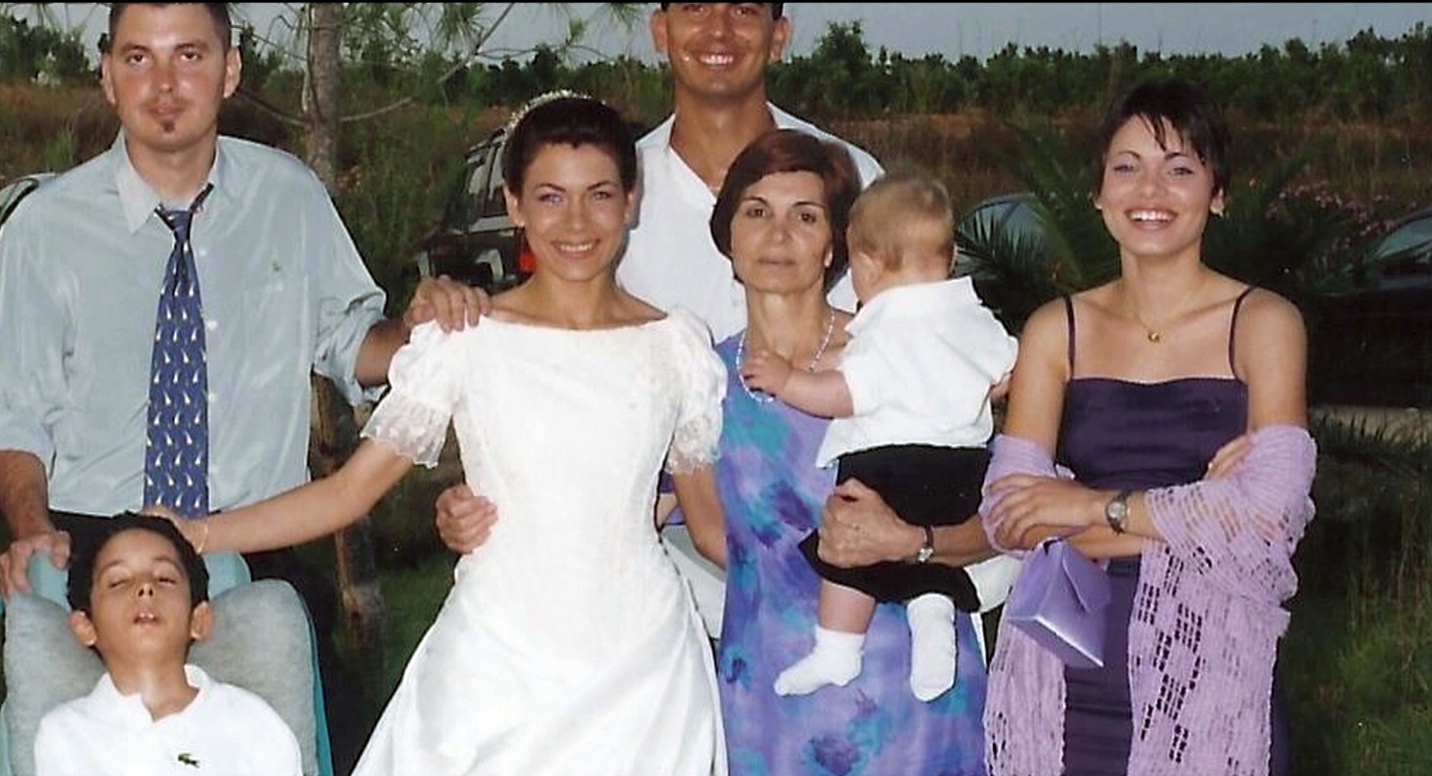
El caso de mi hijo pasó en una piscina pública, también era un servicio público en el que había muchísimas irregularidades. Ésa fue la primera vez que yo perdí a una persona y me dijeron que todo estaba perfecto y que no había pasado nada. La segunda vez fue con mi madre. Por eso, es entendible que mi visión de la justicia deja muchísimo que desear. No creo que haya justicia. Espero que pueda haberla algún día.What happened to my son took place in a public swimming pool — it was also a public service in which there were many irregularities. That was the first time I lost a person and they told me it was all under control. And it wasn't.
Nuestro duelo es totalmente patológico, es un duelo sin cerrar. Pero pensar en no estar es inconcebible. Estar fuera de esta lucha es algo que ni siquiera me planteo. Mi madre habría estado hasta el final. Comentamos muchas veces en casa que, como luchadores, no le llegamos a mi madre ni a la suela del zapato. No nos queda más remedio que seguir. Por ella. Hasta el final. Hasta que las fuerzas aguanten.Our mourning is utterly pathological, an unresolved grief. But thinking of not being here is inconceivable. To be outside this fight is something I don't even consider. My mother would have been there until the end.
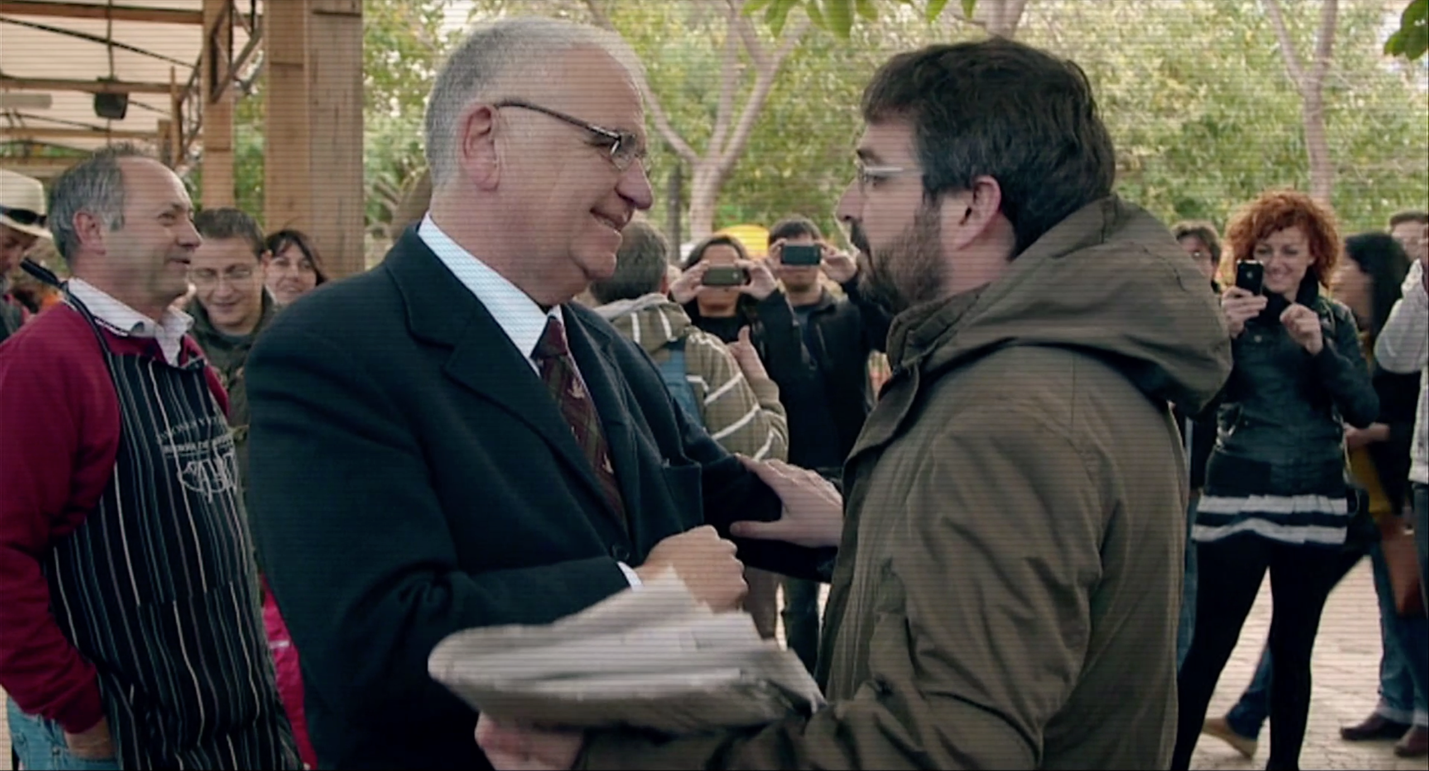
Violeta Rius y Goio Rius
Violeta, superviviente, hija de Maika Garrote · Goio, padre de Violeta y marido de MaikaVioleta, survivor, daughter of Maika Garrote · Goio, Violeta's father and Maika's husband
Goio
El fin de semana anterior y el lunes antes de despedirse es un recuerdo que se me ha quedado marcado para toda la vida. Yo me iba a trabajar a las ocho y ella bajó a desayunar. Nos dimos un beso y nos despedimos. Sobre la una estaba trabajando y una compañera dijo que había habido un accidente en el metro. Llamé a Rosa, porque si sabía que Luís, su marido, iba todos los días en metro a trabajar. Rosa me dijo que Luis estaba en el trabajo así que no me preocupé más. A las tres llegué a casa. Estaba mi hijo sólo. Me dijo que Maika se había ido con Violeta a Valencia. Me fui con la moto a la parada del metro. Vi a una amiga policía que conocía y le pregunté. El nombre de Maika no aparecía, pero sí que aparecía el de Violeta. La habían trasladado a La Fe.The previous weekend and the Monday before saying goodbye is a memory that has stayed with me for the rest of my life. I was leaving for work at eight and she came down for breakfast. We kissed and said goodbye. Around one I was working and a colleague said there had been an accident on the metro. I called Rosa, because Luís, her husband, took the metro every day to work. Rosa told me Luís was at work, so I didn't worry any further. At three I got home. My son was alone. He told me Maika had gone with Violeta to Valencia. I went on the motorbike to the metro stop. I saw a policewoman friend I knew and I asked her. Maika's name didn't appear, but Violeta's did. She had been taken to La Fe.
Tenía una fisura en el cráneo y un coágulo de sangre. Estaba en coma hasta ver cómo evolucionaba. Había que esperar y yo preguntaba por mi mujer, pero mi mujer no aparecía. Hasta las once de la noche mi mujer no apareció. La encontró Rosa en el hospital Sanjurjo. Rosa lloraba, “está viva, está viva. Ha aparecido”. Fue una alegría muy grande. Creía que estaría como otras víctimas que decían que estaban despedazadas. Cuando la vi lo comprendí. Tenía la cabeza aplastada. Sin ser médico lo comprendí todo. La mantuvieron viva tres días. Fue la única vez que he tomado algo para dormir. Algo que me había dado un médico. Lo tomaba para dormir un poco y a las ocho me levantaba y volvía al hospital a esperar a ver si Violeta se despertaba. Le mantenían el coma inducido pero estaba evolucionando bien. Pero desde el miércoles ya me dijeron que Maika estaba en muerte cerebral. El miércoles el médico me preguntó que si la desenchufaba. Le dije que sí. Fui con mis hijos a que se despidiesen. Y la enterramos el jueves. Por eso estuve al margen del macroentierro, la visita del Papa y todos sus putos muertos.She had a fracture in her skull and a blood clot. She was in a coma until they could see how she would progress. We had to wait, and I kept asking about my wife, but my wife wasn't showing up. Until eleven at night my wife didn't appear. Rosa found her at the Sanjurjo hospital. Rosa was crying, “she's alive, she's alive. She's turned up.” It was a huge moment of joy. I thought she would be like other victims who, they said, were torn to pieces. When I saw her I understood. Her head was crushed. Without being a doctor I understood the whole thing. They kept her alive for three days. It was the only time I have taken anything to sleep. Something a doctor had given me. I took it to sleep a little, and at eight I would get up and go back to the hospital to wait and see if Violeta was waking up. They were keeping her in an induced coma but she was doing well. But from the Wednesday they were already telling me Maika was brain dead. On the Wednesday the doctor asked me if he should switch her off. I said yes. I went with my children for them to say goodbye. And we buried her on the Thursday. That's why I had nothing to do with the mass funeral, the Pope's visit, and all his bloody dead.
Violeta
Yo no me acuerdo de nada. Lo último que recuerdo es salir con mi madre del Corte Inglés, bajar las escaleras mecánicas. Y de repente desperté en la sala del hospital con mi padre. Estaba también César, el policía que me sacó, el de las famosas portadas de los diarios. Yo no sabía ni quién era. Mi padre me dijo, “¿no te acuerdas, no?” Lo más parecido a un recuerdo que tengo es un sueño en el que mi madre y yo vamos solas en el metro. No hay nadie más en el vagón, y de repente el tren vuelca. Y ahí acaba el sueño.I don't remember anything. The last thing I remember is leaving El Corte Inglés with my mother, going down the escalators. And suddenly I woke up in the hospital room with my father. César was also there, the policeman who pulled me out, the one from the famous front pages. I didn't even know who he was. My father said to me: “you don't remember, do you?” The closest thing to a memory I have is a dream where my mother and I are alone on the metro. There's no one else in the carriage, and suddenly the train turns over. And there the dream ends.
Goio
César me contó lo que vio cuando entró en el tunel. Violeta caminaba por las vías. Lloraba y gritaba y en cuanto vio a César se lanzó sobre él. En cuanto la agarró en brazos, ella perdió el conocimiento. Ella vivió el accidente consciente. Pero fue tan traumático lo que vio, lo que sintió, el golpe, que no lo recuerda. Supongo que vería imagenes muy duras y por eso, de alguna manera no quiere o no las puede recordar.César told me what he saw when he went into the tunnel. Violeta was walking along the tracks. She was crying and screaming, and the moment she saw César she threw herself at him. As soon as he caught her in his arms, she lost consciousness. She lived through the accident consciously. But what she saw, what she felt, the impact, was so traumatic that she doesn't remember. I suppose she saw very harsh images and that's why, somehow, she doesn't want to or can't remember.
Violeta
No es que no quiera, es que no recuerdo absolutamente nada.It's not that I don't want to — it's that I don't remember absolutely anything.
Goio
Fui a las primeras reuniones de las víctimas cuando aún ni existía la asociación, y no podía hablar. No podía ni abrir la boca. No podía abordar así el duelo personal. Si yo me exponía de esa forma, quedaban a la vista todas mis debilidades. Y yo tenía que estar fuerte para tirar adelante los dos hijos que tenía. Di un paso atrás, vivo con esa sensación. Puedo dar mil explicaciones y a lo mejor fue sólo cobardía.I went to the first meetings of the victims when the association didn't even exist yet, and I couldn't speak. I couldn't even open my mouth. I couldn't face mourning in that way. If I exposed myself like that, all my weaknesses would be on show. And I had to be strong to bring up the two children I had. I took a step back, I live with that feeling. I can give a thousand explanations, and maybe it was just cowardice.
Violeta
Mi padre, yo sé que se ha volcado en nosotros para que notásemos menos la ausencia de nuestra madre. Yo siempre se lo voy a agradecer, no se le puede reprochar nada. Pero al principio no te das cuenta de lo que él está haciendo, de cómo lo está pasando.My father, I know he has thrown himself into us so that we would feel the absence of our mother less. I will always be grateful to him; he cannot be reproached for anything. But at first you don't realise what he is doing, how hard a time he is having.
Goio
Al principio de la lucha les dije a mis cuñadas que tenían todo mi apoyo. Pero que yo no tenía fuerzas para desgastarme en una lucha que no sabíamos adónde iba a llevar. A mí no iban a devolverme a mi mujer. “No os voy a poder ayudar en gran cosa, y creo que donde debo estar es con mis hijos”. Pero también tenía una responsabilidad moral de apoyar lo que estaban haciendo mis cuñadas. Me recrimino eso. “¿Y yo qué soy? ¿Un débil? ¿Un cobarde? ¿Me excuso en que he de proteger a mis hijos?” Siento que no he estado a la altura que debía. Por eso fue una liberación cuando Violeta empezó a implicarse y a ir.At the start of the struggle I told my sisters-in-law that they had all my support. But that I didn't have the strength to wear myself out in a fight whose end we couldn't see. They weren't going to give me back my wife. “I'm not going to be able to help much, and I think where I should be is with my children.” But I also had a moral responsibility to support what my sisters-in-law were doing. I reproach myself for that. “And what am I? A weakling? A coward? Am I using having to protect my children as an excuse?” I feel I haven't been up to what was expected of me. That's why it was a release when Violeta started getting involved and going.
Violeta
He tardado mucho más tiempo en implicarme y ni de lejos lo he hecho como ellas. Mis tías me contaban lo que hacían en la asociación. No recuerdo un momento concreto de decirle a mi padre, “ay, pues yo quiero ir”. Algún día fui a una concentración. Te desesperas más que otra cosa. Te dan ganas de no volver, porque era muy deprimente ser tan poca gente.It took me much longer to get involved, and not by a long way as much as they did. My aunts would tell me what they were doing in the association. I don't remember a specific moment of telling my father, “oh, then I want to go too.” I went to a gathering one day. You get more desperate than anything. You feel like not going back, because it was so depressing to be such a small group.
Goio
Cuando ella empezó a tener más conciencia empezó a insistirme para que fuera. A partir de los 15 años, porque cuando el accidente ella tenía 11. Violeta me decía, “tú dices que vaya, pero tú no vienes. Vente”. Yo me negaba. Y ella, “¿piensas que las tías no lo pasan mal?” Yo intentaba razornarles que no podía estar alimentando esa depresión cada mes. Cada día 3. Eso es muy duro, Violeta. Recuerdo repetirle ese razonamiento.When she began to have more awareness she started insisting that I go. From the age of 15, because when the accident happened she was 11. Violeta would say to me: “you say go, but you don't come yourself. Come.” I would refuse. And she would say: “do you think your sisters-in-law don't have a hard time?” I tried to argue back that I couldn't keep feeding that depression every month. Every 3rd. That is very hard, Violeta. I remember repeating that reasoning to her.
Violeta
Al principio, no lo entendía y comparaba. “Pues si las tías van, tú también.” Supongo que yo también quería que me acompañara. “Va papá, vamos.” Después ya vi que mejor iba yo sola. Cuando empezó a venir, casi prefería que no viniese, porque lo veía sufrir.At the beginning, I didn't understand and I compared. “If the aunts go, you go too.” I suppose I also wanted him to come with me. “Come on, Dad, let's go.” Later I realised it was better if I went alone. When he started coming, I almost preferred he didn't, because I could see he was suffering.
Goio
Yo estaba muy enamorado de mi mujer. Creo que no ha pasado ni un puto día que en algún momento no haya pensado en ella. Que no la haya echado de menos. Ni un puto día en nueve años. Siempre hay un momento del día que pienso que por qué no está. ¿Por qué me tocó a mí?I was very much in love with my wife. I don't think a single bloody day has gone by when I haven't thought of her at some moment. When I haven't missed her. Not a single bloody day in nine years. There is always a moment.
A veces me preguntan: “¿Cómo era la mamá?”. Y yo en ese momento me enfado, “¡que tenías once años! Algún recuerdo de tu madre sí que tendrías que tener.” Pero no lo tienen. Cuando nos habéis preguntado, Violeta enseguida ha dicho, “que hable él”. Porque ella no sabría decir nada de su madre. De alguna manera, hice un vídeo de Maika por eso. Para que tuvieran un recuerdo de su madre. Porque yo he sido incapaz de deshacerme de su recuerdo.Sometimes they ask me: “What was Mum like?” And in that moment I get angry: “you were eleven! You should have some memory of your mother.” But they don't. When you've asked us about her, I see they don't remember either.
Nunca he tenido la más mínima intención de buscar otra mujer. Y a lo mejor debería despegarme de ese recuerdo. Los amigos me dicen que me haga el ánimo, que me vendría bien una mujer. No quiero. Para mí no ha habido otra mujer. Me reconozco enamorado de mi mujer. Estos dos últimos años prácticamente he ido a todas las concentraciones del día 3. Y la sensación es buena. Pero después vuelvo a casa y mi mujer no está. Es como ir a un entierro cada día 3. Sí, he oído muchos gritos de ánimo, pero mi mujer no está.I have never had the slightest intention of looking for another woman. And perhaps I should let go of that memory. My friends tell me I should cheer myself up, that a woman would do me good. I don't want to. As far as I'm concerned, my wife is still here. And I'm fine like that.
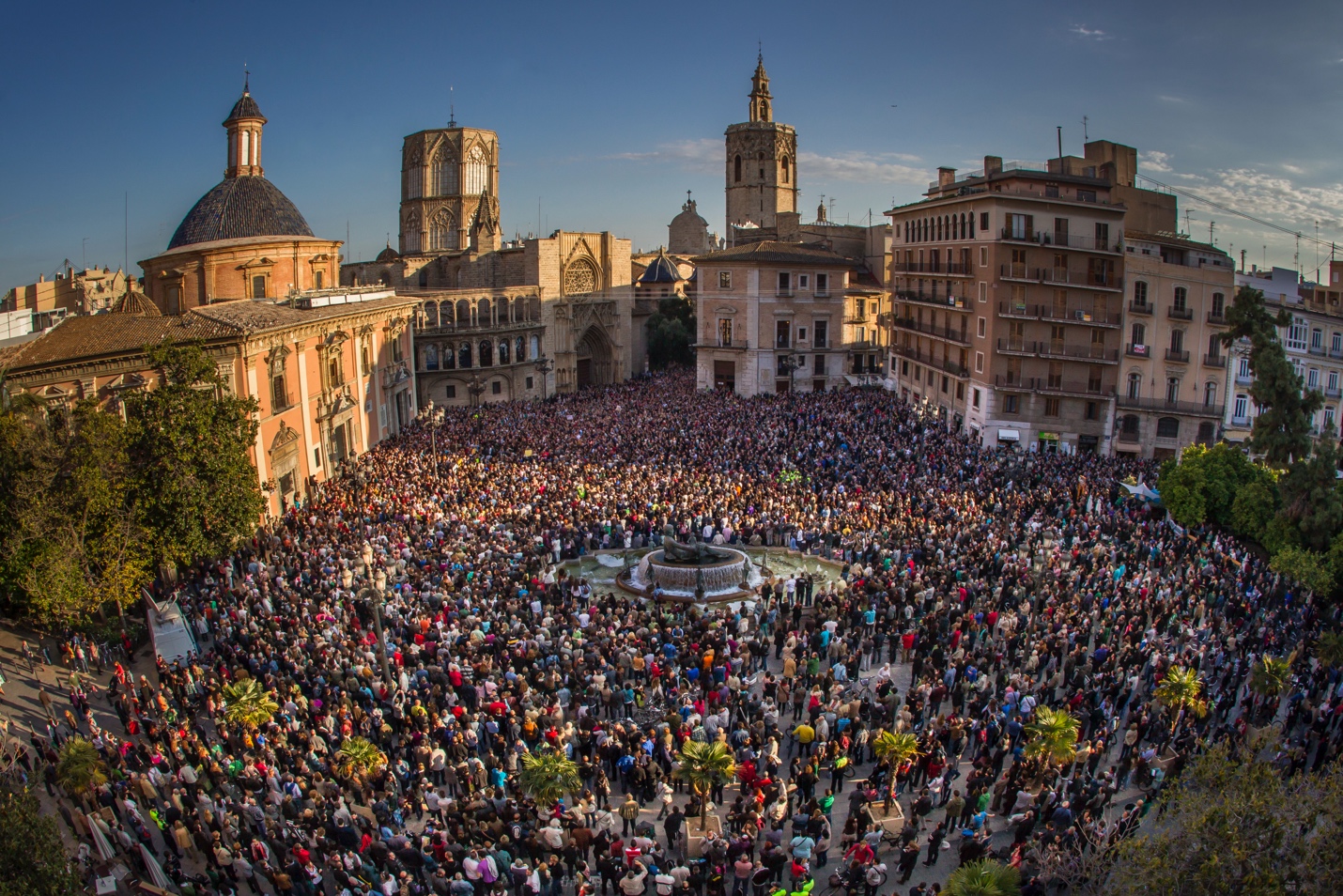
Violeta
Para mí, ir a la Plaza de la Virgen y verla llena era un descanso. Otro mes que habíamos pasado bien. Porque vivíamos con el miedo de que algún mes la plaza volviese a estar vacía. Era el miedo de pensar que no íbamos a aguantar mucho más. Para mí, era muy importante que ellas por fin pudieran descansar y volver a sus vidas. Por eso, cuando Rosa me dijo un día, “Beti no está que se va al pueblo. ¿Quieres leer tú?”, yo no podía decir que no.For me, going to the Plaza de la Virgen and seeing it full was a relief. Another month we had got through well. Because we lived with the fear that some month the square would go back to being empty. It was the fear of thinking that they had forgotten us.
Goio
Ella se ha sentido muchas veces en deuda, especialmente con Beti. Porque pensaba que estaba desaprovechando unos momentos especiales de su vida, que ya no volverían. De disfrutar de sus hijas. Ella tiene dos hijas pequeñas. Y la asociación le ha robado mucho tiempo de estar con ellas.She has often felt indebted, especially to Beti. Because she thought she was wasting special moments of her own life — moments that would not come back. She has the right to enjoy her daughters.
Violeta
Te pones en su piel. Ha sido muy largo. Por eso era tan importante, no podéis imaginar cuánto, el apoyo que nos daba la gente. Ver la plaza llena era la única esperanza que teníamos. Mientras la gente esté implicada en este tema, algo podremos hacer. Si no, cualquier posibilidad que teníamos se caía. Tampoco confíabamos en las elecciones, porque habían sido tantas decepciones. Tantas veces que pensábamos que esta vez sí cambiarían las cosas y no cambiaban nunca. Si estas elecciones no hubieran salido como salieron… ¿Cuatro años más? Ya se nos iban las fuerzas.You put yourself in their shoes. It's been very long. That's why it was so important — you can't imagine how much — the support the people gave us. Seeing the square full was the only hope we had. As long as people were involved in this, there was something we could do. If not, any chance we had collapsed. We didn't trust the elections either, because there had been so many disappointments. So many times we had thought this time things would change, and they never did. If these elections hadn't gone the way they did… Another four years? Our strength was running out.
Goio
Yo me quedé muy decepcionado con las elecciones del 2007. Tengo claro que, en aquella coyuntura, el accidente del metro no supuso un cambio en la manera de pensar de la gente. Yo esperaba una respuesta de la sociedad de apoyo que no encontré. La gente siguió votando al PP. Y con mayorías absolutas.I was very disappointed with the 2007 elections. I am clear that, in that situation, the metro accident did not produce any change in the way people thought. I expected a civic response that did not happen.
Cualquier politico puede equivocarse. Incluso por negligencia. Lo acepto. Y la mala suerte también la acepto. Lo que no acepto es que no hayan sido capaces de reconocer que lo hicieron mal. “Lo siento”, si no quieres entrar en detalles, por lo menos decir un “lo siento”. Pero no estuvieron a la altura.Any politician can make a mistake. Even through negligence. I accept that. And bad luck I also accept. What I don't accept is that they haven't been able to recognise that they did it badly. “I'm sorry, I'm wrong.” That would have cost nothing. Saying “sorry” would have cost nothing.
Violeta
Eso de alguna manera hace que cueste más cicatrizar la herida. Porque, además de aceptar que tu familiar no está, has de aceptar que te están tomando el pelo. Se están riendo en tu cara. Y no costaba tanto. Cualquier persona con un poco de empatía lo hubiese hecho. Y hemos tenido que estar cada día 3 en la plaza, recordando. Recordar continuamente lo que quieres ya cicatrizar de una vez. De alguna manera sabes que has de olvidar. Y no te están dejando.In some way, that makes it harder for the wound to heal. Because, on top of having to accept that your relative isn't here, you have to accept that they are taking you for a fool. They are laughing in your face. And it wouldn't have cost anything…
Goio
Con las últimas elecciones, la cosa cambió de una manera radical. Es el descanso de haber conseguido que por fin, a nivel social, se hayan hecho eco de lo que pasó y que por fin se haga una investigación como Dios manda. Pero ya no esperamos saber muchas más cosas de las que ya sabemos. No espero gran cosa. Porque al final, a mí nunca me van a devolver a mi mujer. Por muchas comisiones de investigación que se hagan. Ya hemos conseguido lo que queríamos.With the last elections, things changed radically. It is the relief of having finally achieved that, at the social level, what happened has been recognised and that an investigation is finally being carried out. What we could ask for.
Violeta
Lo que podíamos pedir.What we could ask for.
Goio
Lo que podíamos pedir, ya está.What we could ask for, that's it now.
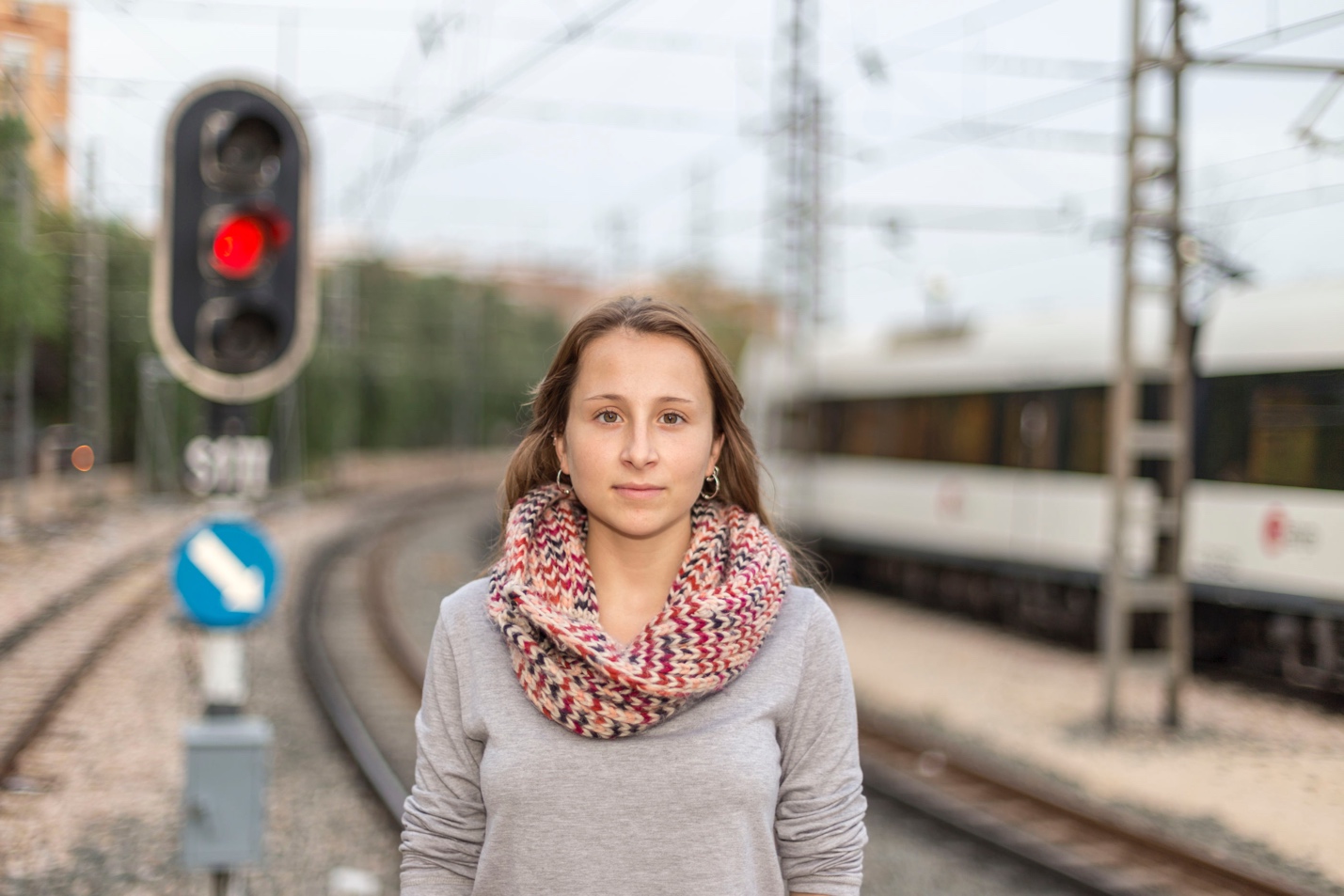
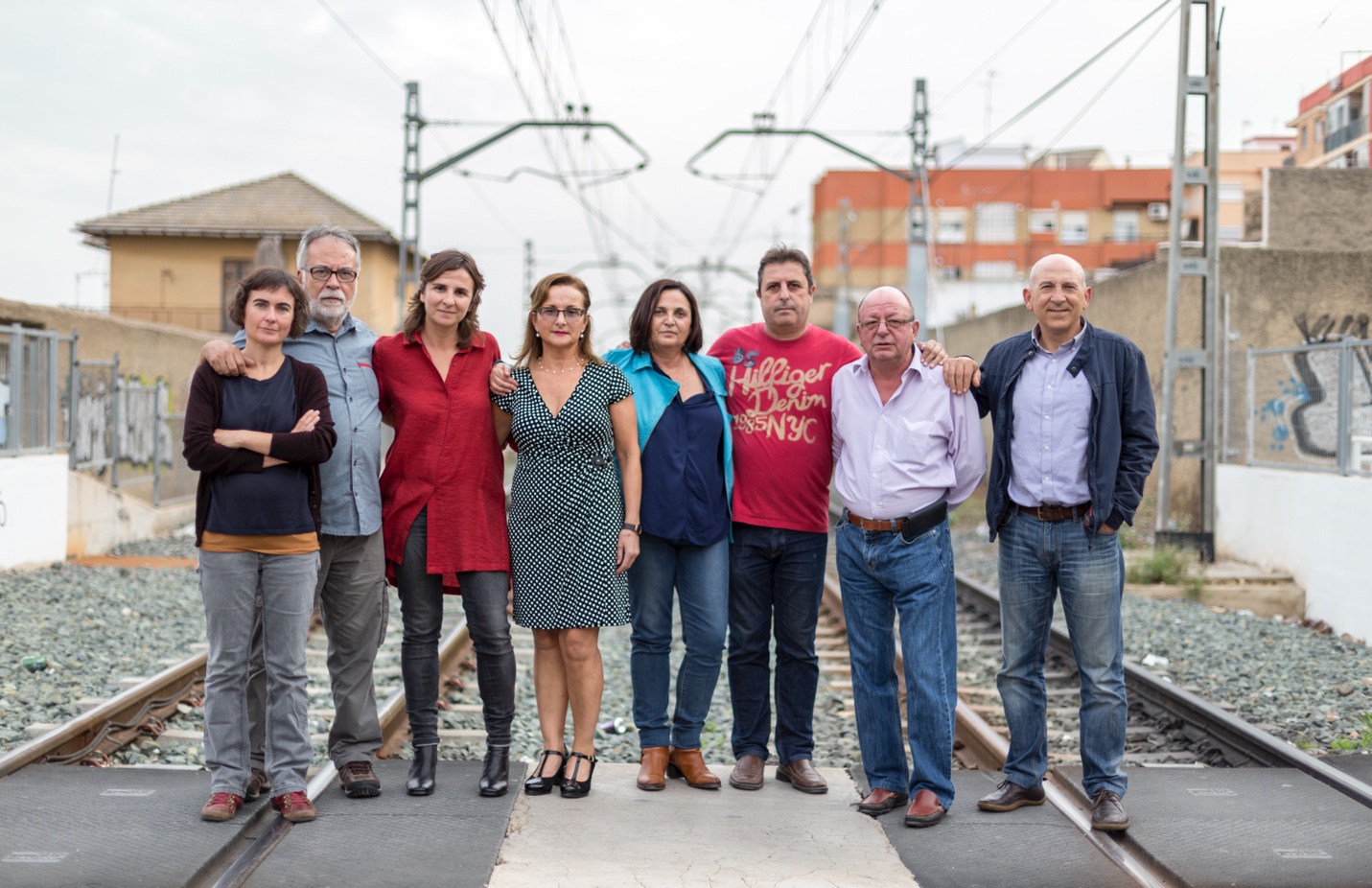
Justicia, la última victoriaJustice, the last victory
14 años después, la lucha de la Asociación de Víctimas del Metro finaliza. Cuatro directivos de Ferrocarriles han sido condenados a 1 año y 10 meses de prisión por delitos relacionados con la falta de seguridad en el metro. Los propios imputados reconocieron los hechos. Esto supone la aceptación de que la empresa fue responsable del accidente. El martes 3 de marzo de 2020, en la última concentración, la asociación se despide y se retira la camiseta. Sus luchas han terminado y por fin tienen un final digno.Fourteen years after the accident, the struggle of the Metro Victims' Association came to an end. Four directors of the regional railway company were sentenced to 1 year and 10 months in prison for offences related to a lack of safety on the metro. The defendants themselves acknowledged the facts — an acceptance that the company was responsible for the accident. On Tuesday 3 March 2020, at the final monthly gathering, the association said its farewell and took off its T-shirt. Their fight was over, and at last they had a dignified ending.